MESOPOTAMIA NEWS : IN DEN EINWANDERERLAGERN HERRSCHT DIE MAFIA !
Messerstechereien zwischen Flüchtlingsgruppen auf Samos, 150 Migranten in griechischer Kleinstadt positiv auf das Coronavirus getestet – die neusten Entwicklungen in der Migrationskrise
In Griechenland leben rund 100 000 Migranten dicht gedrängt in Lagern. Besonders prekär ist die Lage auf den Inseln. Infektionen mit dem Coronavirus stellen nun eine neue Bedrohung dar – auch auf Malta. – NZZ Redaktion Aktualisiert 27.04.2020, 15.21 Uhr
Annexionen im Westjordanland : Warnung vor dem Apartheid-Staat
MESOPOTAMIA NEWS APARTHEID : ISRAEL ANNEXIONEN !
„So kommt mit die deutlichste Kritik aus Israel selbst. „Eine Annexion würde einen tödlichen Schlag für eine Friedensmöglichkeit und die Schaffung eines Apartheid-Staats bedeuten“, erklären 56 ehemalige vorwiegend linke und liberale Knesset-Abgeordnete, unter ihnen frühere Minister.“
- Von Jochen Stahnke, Tel Aviv FAZ – Aktualisiert am 27.04.2020-13:55
MESOPOTAMIA NEWS CHINA EXPORT : PERFEKTES VIRUS / MISERABLE NOTFALLAUSRÜSTUNG IM VERKAUF
27 April 2020 – Redaktionsnetzwerk Deutschland: Australiens Außenministerin Marisa Payne zum Beispiel verlangt inzwischen, den genauen Ursprung der Epidemie in China durch ein unabhängiges internationales Expertengremium untersuchen zu lassen. Notwendig sei jetzt die „Bereitschaft zu umfassender Transparenz“ – anderenfalls könne die Weltgemeinschaft kein neues Vertrauen fassen.”
“Die 34 Jahre alte Sanna Marin regiert seit vier Monaten Finnland, als jüngste Regierungschefin der Welt. Die pragmatische Sozialdemokratin ist als eine eher leise Problemlöserin unterwegs, sie legt es nicht auf Schlagzeilen an.
Mit einer unerwartet harten Linie aber hat sie es jüngst sogar in die „New York Times“ geschafft. Marin trennte sich vom Chef der staatlichen finnischen Agentur, die für ihre Regierung Notfallausrüstungen aller Art beschafft: „Ich habe das Vertrauen in ihn verloren.“
MESOPOTAMIA NEWS „GOOD NEWS“ : Iraqis in US, German courtrooms held for extremist crimes
Laurie Mylroie | KURDISTAN24 – Fallujah, Iraq. (Photo: US Marine Corps)
WASHINGTON DC (Kurdistan 24) – Two men from Iraq faced cases in two courts this month: in two different countries, six thousand miles apart, and thousands of miles from their homes in Fallujah.
Both were involved in violence in Iraq carried out in the name of Islam, although it is questionable whether they were motivated to kill because of their religious beliefs or whether that was a convenient cover for other motives—like a struggle for power and economic resources in post-2003 Iraq or a drive to exercise vicious domination over others.
United States
A detention hearing for one Iraqi – Ali Yousef Ahmed al-Nouri – was scheduled for April 7 in Phoenix, Arizona.
MESOPOTAMIA NEWS : DAS GROSSE “WIR!” = „GÖPEL & VOGL = Alle großen Theoretiker haben sich schon zu Wort gemeldet!“ und auch noch: In dieser Woche das Corona- Gesprächs-Buch „Trotzdem“ von Ferdinand von Schirach & Alexander Kluge
Die FAZ Frau JULIA ENCKE weiss noch nicht, auf was genau sie als Gebrauchsideologin z.Zt. hinschreiben soll! Allemal aber wirkt das Virus erfreulich produktiv!
Krise der großen Theorien : Warum wir gerade lieber Drosten als Sloterdijk hören – Von Julia Encke – FAZ – 26.04.2020-
Es geht um den Umgang mit Ungewissheit und unvollständigem Wissen: Der Kulturwissenschaftler Joseph Vogl und die Nachhaltigkeitsforscherin Maja Göpel.
Alle großen Theoretiker haben sich schon zu Wort gemeldet. Aber die Begriffe und Lösungen, mit denen sie daherkommen, sind die alten. Ihre Selbstgewissheit führt uns in der Corona-Krise nicht weiter.
Als im März die Kontaktsperre verhängt wurde, befragte der „Tagesspiegel“ den Politikwissenschaftler Herfried Münkler zum Ausnahmezustand: „Souverän ist, wer über den Ausnahmezustand entscheidet, hat der Staatsrechtler Carl Schmitt gesagt. Ist Angela Merkel in der Corona-Krise in diesem Sinne souverän?“
MESOPOTAMIA NEWS APARTHEID: DIE REICHEN SIND NICHT DIE HELDEN! – Corona-Krise: US-Superreiche verbunkern sich in Neuseeland
27.04.2020 • 06:45 Uhr – Heile Welt mit Bunkern? Landschaft bei Christchurch in Neuseeland – Berichten zufolge Zufluchtsort für superreiche US-Amerikaner
Die Mehrheit der Bürger der Vereinigten Staaten von Amerika hat keine andere Wahl, als sich inmitten der Corona-Krise mit den Fehlleistungen ihrer Regierung abzufinden. Die Schicht der US-Superreichen hingegen sucht Zuflucht in Neuseeland.
von Darius Shahtahmasebi
MESOPOTAMIA NEWS SPECIAL – Top nuke agency: coronavirus endangers balance of nuclear forces worldwide Within days of the US officials’ attempts to deter American adversaries, Newsweek reported that US nuclear and associated forces have 106 uniformed personnel off duty due to coronavirus. By YONAH JEREMY BOB – JERUSALEM POST APRIL 20, 2020 21:21 Last week, associate editor John Krzyzaniak wrote about common risks that the US, Russia, the UK, France and China face during the coronavirus era. If any of these powers’ nuclear forces lose their ability to operate, that country and potentially the balance of forces between NATO allies and eastern nuclear powers could be thrown off and lead to unpredictable conflict. Though Krzyzaniak does not address Israel specifically, Jerusalem’s presumed nuclear deterrent (according to foreign sources) is one of the threats that keep some of its adversaries at bay. Krzyzaniak started with risks to US nuclear readiness. The Bulletin quoted two high-ranking US officials involved with nuclear forces who guaranteed in recent weeks that their forces “remain ready to execute the nation’s strategic deterrence mission” and that, despite the COVID-19 outbreak, “its nukes are still ready to fly.” Analyzing the comments by these officials, Krzyzaniak wrote: “Rhetoric notwithstanding, the US nuclear mission and its analogues around the world rely heavily on people, and people are exactly what the virus is after.” Within days of the US officials’ attempts to reassure the public and deter American adversaries, Newsweek reported that US nuclear and associated forces have 106 uniformed personnel off duty due to coronavirus. On April 9, Hans Kristensen, director of the Nuclear Information Project at the Federation of American Scientists, tweeted the stunning disclosure that all US nuclear bases except one had confirmed cases of COVID-19. Kristensen named Barksdale AFB (bombers), F.E. Warren AFB (bombers), Kirtland AFB (storage), Minot AFB (bombers/ICBMs), Offutt AFB (NC3) and Whiteman AFB (bombers) as having confirmed infections. That is the general picture of how the coronavirus could immobilize what might otherwise be a firm nuclear deterrent. But there are much more specific problems for some countries. For example, the Bulletin said England’s nuclear deterrent is based on a single platform, its submarines. In early April, The Times reported that two of Britain’s four nuclear-armed submarines have been under repairs for the last year, Krzyzaniak noted. The Bulletin said with only two operational submarines left, the British Royal Navy “has almost no margin for error in dealing with the coronavirus.” Quoting Sebastian Brixey-Williams, co-director of the London-based British American Security Information Council, he said corona “poses profound questions about how prepared the [Royal Navy] is to cope with the COVID-19 pandemic. Were a Trident submarine to go on patrol only to find that one of its sailors had brought the virus aboard, the captain would have no option but to return to port or else risk the lives of the crew.” This could break England’s round-the-clock deterrence mission, which is expected to be uninterrupted to be credible. The US, Russia and France all also rely to some degree on nuclear-armed ballistic missiles at sea. Regarding the US, Krzyzaniak said it has 14 nuclear-armed submarines, while Russia has 10, though some of those are under maintenance at any given time. Regarding France, though it only has four nuclear-capable submarines, he said it has not had the same maintenance problems as the British fleet. Regarding China, Krzyzaniak quoted Tong Zhao, a senior fellow at the Carnegie Endowment for International Peace, who said China’s nuclear submarine fleet is also vulnerable to the virus. Compared to land-based missile forces and aircraft units, submarines have a greater challenge both because of their inability to receive external support during deployment and because of their relative lack of operational experience, Krzyzaniak wrote. However, China relies much less on the sea-based leg of its triad, compared with Western nuclear powers, he said. The threat to submarines can also be extrapolated from problems already faced on aircraft carriers, Krzyzaniak wrote. France’s sole aircraft carrier, which plays a role in its air force’s nuclear-strike missions, returned home on April 12 with at least 50 cases on coronavirus onboard. Similarly, Forbes reported: “The entire crew of a Russian [non-nuclear armed] submarine has reportedly been quarantined after indirect contact with a confirmed case of COVID-19.” Four different US aircraft carriers have reported COVID-19 cases onboard, including the much-publicized case of the USS Theodore Roosevelt, whose captain set off an internal storm in the US Navy. Another potential vulnerability for China is that it keeps nuclear warheads in constant circulation between central storage at a base in the Qingling mountains and other locations, the Bulletin said. In light of these threats, the US, China and other countries are scaling down exercises. Some countries are putting sailors into a 14-day pre-departure quarantine, and some are training their personnel to carry out multiple roles
MESOPOTAMIA NEWS SPECIAL – Top nuke agency: coronavirus endangers balance of nuclear forces worldwide
Within days of the US officials’ attempts to deter American adversaries, Newsweek reported that US nuclear and associated forces have 106 uniformed personnel off duty due to coronavirus.
By YONAH JEREMY BOB – JERUSALEM POST APRIL 20, 2020 21:21
Last week, associate editor John Krzyzaniak wrote about common risks that the US, Russia, the UK, France and China face during the coronavirus era.
If any of these powers’ nuclear forces lose their ability to operate, that country and potentially the balance of forces between NATO allies and eastern nuclear powers could be thrown off and lead to unpredictable conflict.
Though Krzyzaniak does not address Israel specifically, Jerusalem’s presumed nuclear deterrent (according to foreign sources) is one of the threats that keep some of its adversaries at bay.
Krzyzaniak started with risks to US nuclear readiness.
The Bulletin quoted two high-ranking US officials involved with nuclear forces who guaranteed in recent weeks that their forces “remain ready to execute the nation’s strategic deterrence mission” and that, despite the COVID-19 outbreak, “its nukes are still ready to fly.”
Analyzing the comments by these officials, Krzyzaniak wrote: “Rhetoric notwithstanding, the US nuclear mission and its analogues around the world rely heavily on people, and people are exactly what the virus is after.”
Within days of the US officials’ attempts to reassure the public and deter American adversaries, Newsweek reported that US nuclear and associated forces have 106 uniformed personnel off duty due to coronavirus.
On April 9, Hans Kristensen, director of the Nuclear Information Project at the Federation of American Scientists, tweeted the stunning disclosure that all US nuclear bases except one had confirmed cases of COVID-19.
Kristensen named Barksdale AFB (bombers), F.E. Warren AFB (bombers), Kirtland AFB (storage), Minot AFB (bombers/ICBMs), Offutt AFB (NC3) and Whiteman AFB (bombers) as having confirmed infections.
That is the general picture of how the coronavirus could immobilize what might otherwise be a firm nuclear deterrent.
But there are much more specific problems for some countries.
For example, the Bulletin said England’s nuclear deterrent is based on a single platform, its submarines.
In early April, The Times reported that two of Britain’s four nuclear-armed submarines have been under repairs for the last year, Krzyzaniak noted.
The Bulletin said with only two operational submarines left, the British Royal Navy “has almost no margin for error in dealing with the coronavirus.”
Quoting Sebastian Brixey-Williams, co-director of the London-based British American Security Information Council, he said corona “poses profound questions about how prepared the [Royal Navy] is to cope with the COVID-19 pandemic. Were a Trident submarine to go on patrol only to find that one of its sailors had brought the virus aboard, the captain would have no option but to return to port or else risk the lives of the crew.”
This could break England’s round-the-clock deterrence mission, which is expected to be uninterrupted to be credible.
The US, Russia and France all also rely to some degree on nuclear-armed ballistic missiles at sea.
Regarding the US, Krzyzaniak said it has 14 nuclear-armed submarines, while Russia has 10, though some of those are under maintenance at any given time.
Regarding France, though it only has four nuclear-capable submarines, he said it has not had the same maintenance problems as the British fleet.
Regarding China, Krzyzaniak quoted Tong Zhao, a senior fellow at the Carnegie Endowment for International Peace, who said China’s nuclear submarine fleet is also vulnerable to the virus.
Compared to land-based missile forces and aircraft units, submarines have a greater challenge both because of their inability to receive external support during deployment and because of their relative lack of operational experience, Krzyzaniak wrote.
However, China relies much less on the sea-based leg of its triad, compared with Western nuclear powers, he said.
The threat to submarines can also be extrapolated from problems already faced on aircraft carriers, Krzyzaniak wrote.
France’s sole aircraft carrier, which plays a role in its air force’s nuclear-strike missions, returned home on April 12 with at least 50 cases on coronavirus onboard.
Similarly, Forbes reported: “The entire crew of a Russian [non-nuclear armed] submarine has reportedly been quarantined after indirect contact with a confirmed case of COVID-19.”
Four different US aircraft carriers have reported COVID-19 cases onboard, including the much-publicized case of the USS Theodore Roosevelt, whose captain set off an internal storm in the US Navy.
Another potential vulnerability for China is that it keeps nuclear warheads in constant circulation between central storage at a base in the Qingling mountains and other locations, the Bulletin said.
In light of these threats, the US, China and other countries are scaling down exercises. Some countries are putting sailors into a 14-day pre-departure quarantine, and some are training their personnel to carry out multiple roles if necessary.
Worldwide nuclear war or a surprise attack on the US or NATO allies is far from likely. But like everything else in the age of coronavirus, nothing can be taken for granted.
Within days of the US officials’ attempts to deter American adversaries, Newsweek reported that US nuclear and associated forces have 106 uniformed personnel off duty due to coronavirus.
By YONAH JEREMY BOB – JERUSALEM POST APRIL 20, 2020 21:21
Last week, associate editor John Krzyzaniak wrote about common risks that the US, Russia, the UK, France and China face during the coronavirus era.
If any of these powers’ nuclear forces lose their ability to operate, that country and potentially the balance of forces between NATO allies and eastern nuclear powers could be thrown off and lead to unpredictable conflict.
Though Krzyzaniak does not address Israel specifically, Jerusalem’s presumed nuclear deterrent (according to foreign sources) is one of the threats that keep some of its adversaries at bay.
Krzyzaniak started with risks to US nuclear readiness.
The Bulletin quoted two high-ranking US officials involved with nuclear forces who guaranteed in recent weeks that their forces “remain ready to execute the nation’s strategic deterrence mission” and that, despite the COVID-19 outbreak, “its nukes are still ready to fly.”
Analyzing the comments by these officials, Krzyzaniak wrote: “Rhetoric notwithstanding, the US nuclear mission and its analogues around the world rely heavily on people, and people are exactly what the virus is after.”
Within days of the US officials’ attempts to reassure the public and deter American adversaries, Newsweek reported that US nuclear and associated forces have 106 uniformed personnel off duty due to coronavirus.
On April 9, Hans Kristensen, director of the Nuclear Information Project at the Federation of American Scientists, tweeted the stunning disclosure that all US nuclear bases except one had confirmed cases of COVID-19.
Kristensen named Barksdale AFB (bombers), F.E. Warren AFB (bombers), Kirtland AFB (storage), Minot AFB (bombers/ICBMs), Offutt AFB (NC3) and Whiteman AFB (bombers) as having confirmed infections.
That is the general picture of how the coronavirus could immobilize what might otherwise be a firm nuclear deterrent.
But there are much more specific problems for some countries.
For example, the Bulletin said England’s nuclear deterrent is based on a single platform, its submarines.
In early April, The Times reported that two of Britain’s four nuclear-armed submarines have been under repairs for the last year, Krzyzaniak noted.
The Bulletin said with only two operational submarines left, the British Royal Navy “has almost no margin for error in dealing with the coronavirus.”
Quoting Sebastian Brixey-Williams, co-director of the London-based British American Security Information Council, he said corona “poses profound questions about how prepared the [Royal Navy] is to cope with the COVID-19 pandemic. Were a Trident submarine to go on patrol only to find that one of its sailors had brought the virus aboard, the captain would have no option but to return to port or else risk the lives of the crew.”
This could break England’s round-the-clock deterrence mission, which is expected to be uninterrupted to be credible.
The US, Russia and France all also rely to some degree on nuclear-armed ballistic missiles at sea.
Regarding the US, Krzyzaniak said it has 14 nuclear-armed submarines, while Russia has 10, though some of those are under maintenance at any given time.
Regarding France, though it only has four nuclear-capable submarines, he said it has not had the same maintenance problems as the British fleet.
Regarding China, Krzyzaniak quoted Tong Zhao, a senior fellow at the Carnegie Endowment for International Peace, who said China’s nuclear submarine fleet is also vulnerable to the virus.
Compared to land-based missile forces and aircraft units, submarines have a greater challenge both because of their inability to receive external support during deployment and because of their relative lack of operational experience, Krzyzaniak wrote.
However, China relies much less on the sea-based leg of its triad, compared with Western nuclear powers, he said.
The threat to submarines can also be extrapolated from problems already faced on aircraft carriers, Krzyzaniak wrote.
France’s sole aircraft carrier, which plays a role in its air force’s nuclear-strike missions, returned home on April 12 with at least 50 cases on coronavirus onboard.
Similarly, Forbes reported: “The entire crew of a Russian [non-nuclear armed] submarine has reportedly been quarantined after indirect contact with a confirmed case of COVID-19.”
Four different US aircraft carriers have reported COVID-19 cases onboard, including the much-publicized case of the USS Theodore Roosevelt, whose captain set off an internal storm in the US Navy.
Another potential vulnerability for China is that it keeps nuclear warheads in constant circulation between central storage at a base in the Qingling mountains and other locations, the Bulletin said.
In light of these threats, the US, China and other countries are scaling down exercises. Some countries are putting sailors into a 14-day pre-departure quarantine, and some are training their personnel to carry out multiple roles if necessary.
Worldwide nuclear war or a surprise attack on the US or NATO allies is far from likely. But like everything else in the age of coronavirus, nothing can be taken for granted.
MESOPOTAMIA NEWS SOUTH KURDISTAN – IRAQ : KDP – BARZANI STRONGER FORCES CONTRA QUANDIL PKK
Roj news (PKK source) : KDP is stationed in Zînî wartê, despite warnings
Local sources told Roj News that the Kurdistan Democratic Forces have strengthened their presence in separate areas in the vicinity of Zînî wartê, despite warnings issued by Kurdish forces.KURDISTAN 25 Apr 2020, Sat – 13:57 2020-04-25T13:57:00 NEWS DESK
MESOPOTAMIA NEWS : ASSAD’S PERSONAL HENCHMAN – Syria’s Grand Mufti, Ahmad Badereddin Hassoun, is claimed to have fallen out of favour with the Assad regime
26 April 2020 1h
Hassoun is not only #Assad‘s go-to when it comes to signing death warrants + threatening #Europe w/ suicide bombings, he’s also the darling of those European MPs visiting #Assad over the past years – they always made sure to visit him and have their photos taken with him.
Grannies4Equality@grannies4equal 2h
Heassoun is trusted henchman of Assad; controls suicide bombers embedded in Europe & US; @Amnesty estimates signed 5,000+ death warrants of activists; he calls for slaughter of Syrian civilians; visited Ireland as guest of @TCDISE – now may have fallen out with regime? Oops
More via www.mesop.de
MESOPOTAMIA NEWS KURDISTAN – KOBANE SYRIA – KURDISH UNITY WITH PKK / SDF ?
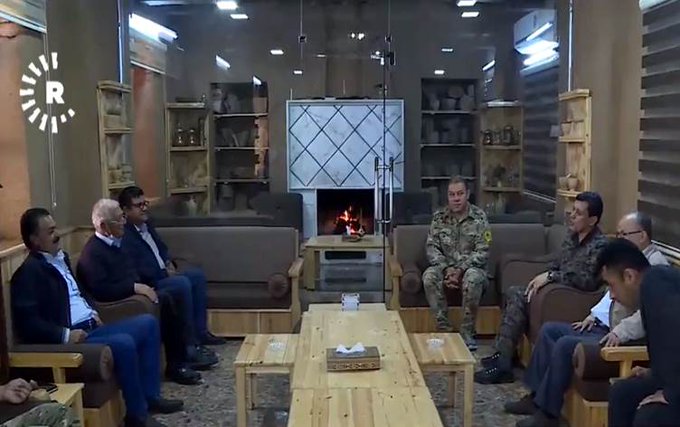
26 Apr 2020 – 18m
A delegation of Kurdish intellectuals and lawyers from Kobane have launched an effort to bring together rivalling Kurdish parties in Syria, an initiative requested by the international community and authorities in the Kurdistan Region of Iraq.
Civil society group brings rival Kurdish parties together in Syria
More www.mesop.de
« neuere Artikel / next articles ältere Artikel / previous articles »