MESOP NEWS FIN DE PARTIE: Michel Houellebecq – Der Selbstmord der Moderne
Der Schriftsteller Michel Houellebecq gilt als einer der bedeutendsten Kulturkritiker der Gegenwart. In einem jetzt in der Wochenzeitung „Welt am Sonntag“ veröffentlichten Aufsatz schreibt er über den „Selbstmord der Moderne“, der nicht nur westliche Gesellschaften betreffe.1
Er teile angesichts der gegenwärtigen Entwicklung die Wahrnehmung des Philosophen Blaise Pascal, der gesagt habe: „Ich schaue in alle Richtungen, und ich sehe überall nur Dunkelheit“. Die gegenwärtige Lage beinhalte nichts, „was nicht Anlass zu Zweifel und Unruhe“ wäre:
- Als eine Reihe früherer französischer Generale vor einigen Monaten in einem offenen Brief vor größeren Verwerfungen in Frankreich warnten, habe man sich zwar verbreitet darüber empört, aber kaum jemand habe noch der Annahme der Generale grundsätzlich widersprochen, „dass Frankreich kurz vor dem Zusammenbruch steht“.
- Das „wichtigste Thema, da es nicht nur eine Verfallserscheinung, sondern der Verfall selbst ist – der Verfall in seinem innersten Wesen“, sei die demographische Krise, die nicht nur Frankreich, sondern alle modern geprägten Staaten in Europa und Asien erfasst habe.
- Diese Krise werde nicht durch äußere Kräfte verursacht, sondern habe innere Ursachen. Man habe es nicht nur mit einem „westlichen Selbstmord“ zu tun, sondern „mit einem Selbstmord der Moderne“. Die „unvermeidliche Folge dessen, was wir Fortschritt nennen (auf allen Ebenen: wirtschaftlich, politisch, wissenschaftlich, technologisch), ist Selbstzerstörung“.
45 Prozent der Franzosen würden in Meinungsumfragen angeben der Ansicht zu sein, dass die beschriebene Entwicklung in einen Bürgerkrieg münden werde. Ein solcher Bürgerkrieg sei jedoch unwahrscheinlich:
„Zum Krieg gehören immer zwei. Werden die Franzosen zu den Waffen greifen, um ihre Religion zu verteidigen? Sie haben schon seit geraumer Zeit keine Religion mehr, und ihre frühere Religion ist eine, bei der man seine Kehle dem Schlachter anbietet.“
Ein Krieg der Franzosen „zur Verteidigung ihrer Kultur, ihrer Lebensweise, ihres Wertesystems“ sei nicht nur aufgrund des mangelnden Willens der meisten Franzosen unwahrscheinlich, sondern auch, weil unklar geworden sei, was diese Kultur ausmache.
Bewertung und Hintergrund
Weitere Gedanken Houellebecqs zu Fragen von Gesellschaft und Religion haben wir hier vorgestellt. Den offenen Brief ehemaliger französischer Generale und anderer Offiziere, auf den Houellebecq sich bezieht, hatten wir hier besprochen.
Aus den Schriften Houellebecqs geht hervor, dass er zwar Atheist, aber kein Gegner des Christentums ist, wie der oben erwähnte Satz über die Religion, die ihre „Kehle dem Schlachter anbietet“, vermuten lassen könnte. So wie der atheistische Philosoph Michel Onfray hofft Houellebecq scheinbar, dass es einem traditionellen Christentum vielleicht noch gelingen könnte, eine kulturelle Erneuerung Frankreichs zu bewirken.
Beispiele wie der in diesen Tagen innerhalb kürzester Zeit erfolgte Zusammenbruch des afghanischen Staates (der seinen Feinden militärisch überlegen war) oder auch der Zusammenbruch des kommunistischen Herrschaftsbereichs 1989 zeigen, wie rasch sich gesellschaftliche Zusammenbrüche vollziehen können, wenn nicht mehr hinreichend Menschen vorhanden sind, die dazu bereit sind, ein Gemeinwesen und seine Ordnung zu verteidigen oder an ihnen unter Druck festzuhalten.
Die Annahme, dass in westlichen Gesellschaften das Risiko solcher Zusammenbrüche zunimmt, ist kein Produkt der literarischen Phantasie Houellebecqs, sondern wird von Krisenforschern geteilt.2 Der Kulturgeograph Jared Diamond, der historische Beispiele für solche Zusammenbrüche untersuchte, definierte diese als „die Extremform des Niederganges“. In der Geschichte der Menschheit habe es solche Ereignisse immer wieder gegeben. Der Übergang zwischen Niedergang und Zusammenbruch habe sich dabei meist fließend gestaltet. Man müsse sich angesichts der Entwicklung des westlichen Kulturraums die „quälende Frage“ stellen, ob „ein solches Schicksal am Ende auch unsere eigene, wohlhabende Gesellschaft ereilen“ könne.3 (FG2)
Quellen
- Michel Houellebecq: „Der Selbstmord der Moderne“, Welt am Sonntag, 15.08.2021, S. 45.
- Luke Kemp: „Are we on the road to civilisation collapse?“, bbc.com, 19.02.2019.
- Jared Diamond: Kollaps. Warum Gesellschaften überleben oder untergehen, Frankfurt a. M. 2005, S. 15-18.
MESOP NEWS INTEL: US spy agencies warned Kabul would fall, but did not give precise timeline, says report
| by Joseph Fitsanakis INTEL ORG 18-8-2021 |
ANALYSES BY UNITED STATES INTELLIGENCE agencies about the dynamics of the Taliban insurgency in Afghanistan became progressively grim over the summer, but did not provide precise timelines of the impending disaster, according to a new report. In his television address on Monday, US President Joe Biden admitted that his administration had rested on inaccurate estimates about the ability of the Taliban to overrun Afghan government defenses. Some —including many in the US intelligence community— have interpreted that statement to mean that the assessments given to the White House by the intelligence agencies were faulty or otherwise inaccurate.
On Tuesday, The New York Times reported that the intelligence community continuously revised its assessments of the Afghan civil war in the past year. Earlier this year, the consensus among intelligence agencies was allegedly that the Afghan government could potentially remain in power for as long as two years after a US military withdrawal. But that consensus had been shattered by mid-summer, according to The Times. By July, intelligence reports, led by those produced by the Central Intelligence Agency (CIA), “had grown more pessimistic” and explicitly “laid out the growing risks to Kabul”, according to the paper. These reports also warned that the Afghan government, including its intelligence and military components, would not be able to withstand an assault on the capital and other major urban centers by the Taliban.
At the same time, however, these assessments were typically “not given a high confidence judgment” or a particularly high level of certainty by the agencies, according to the report. One source told the paper that “it was often hard to get [CIA] analysts to clearly predict how quickly [a Taliban victory] would occur”. Instead, its assessments “could often be interpreted in a number of ways, including concluding that Afghanistan could fall quickly or possibly over time”.
The Times report seems to indicate that the White House rested much of its decision-making on earlier assessments by the intelligence community, which projected a less radical pace of change in Afghanistan. For instance, one report from April of this year suggested that the Taliban were at least 18 months away from being able to conquer Kabul. The article also points out the possibility that different agencies may have had differing views on the speed with which the Taliban would conquer Afghanistan, with the CIA being on the more pessimistic end of the scale.
► Author: Joseph Fitsanakis | Date: 18 August 2021
MESOP NEWS : HEIKO MAAS IM FREIEN FALL ! / NEUE ZÜRCHER ZEITUNG
|
|
|
MESOP NEWS: CREATORS OF TALIBAN – THE MOST RELEVANT REPORT – Pakistan & the Taliban
By Kyle Orton 17 August 2021
Kabul fell to the Taliban on 15 August. There is so much more to be said about the disastrous decisions the United States that precipitated this calamity, not least the so-called peace process whose only concrete effects were to weaken and demoralise the Afghan government, while bolstering the ranks of the Taliban by forcing the release of thousands of jihadists. The chaotic Saigon scenes have testified to the incompetence of Joe Biden’s administration, even at administrative tasks, and the horrors are only just beginning.
MESOP NEWS : THIS HOUR KABUL AIRPORT
#Taliban have set up checkpoints to the airport, meaning anyone who tries to get there is announcing themselves as someone the Taliban wants to kill. Large numbers of people with travel documents can’t get to the airport and flights are leaving half-empty
@FrudBezhan3h 18.8.2021
Evacuation flights from #Kabul are leaving nearly empty. Thousands of Afghans with travel docs can’t get to airport. Taliban have erected checkpoints and are preventing people from entering. Need to secure a clear path for people to get on their flights.
More www.mesop.de
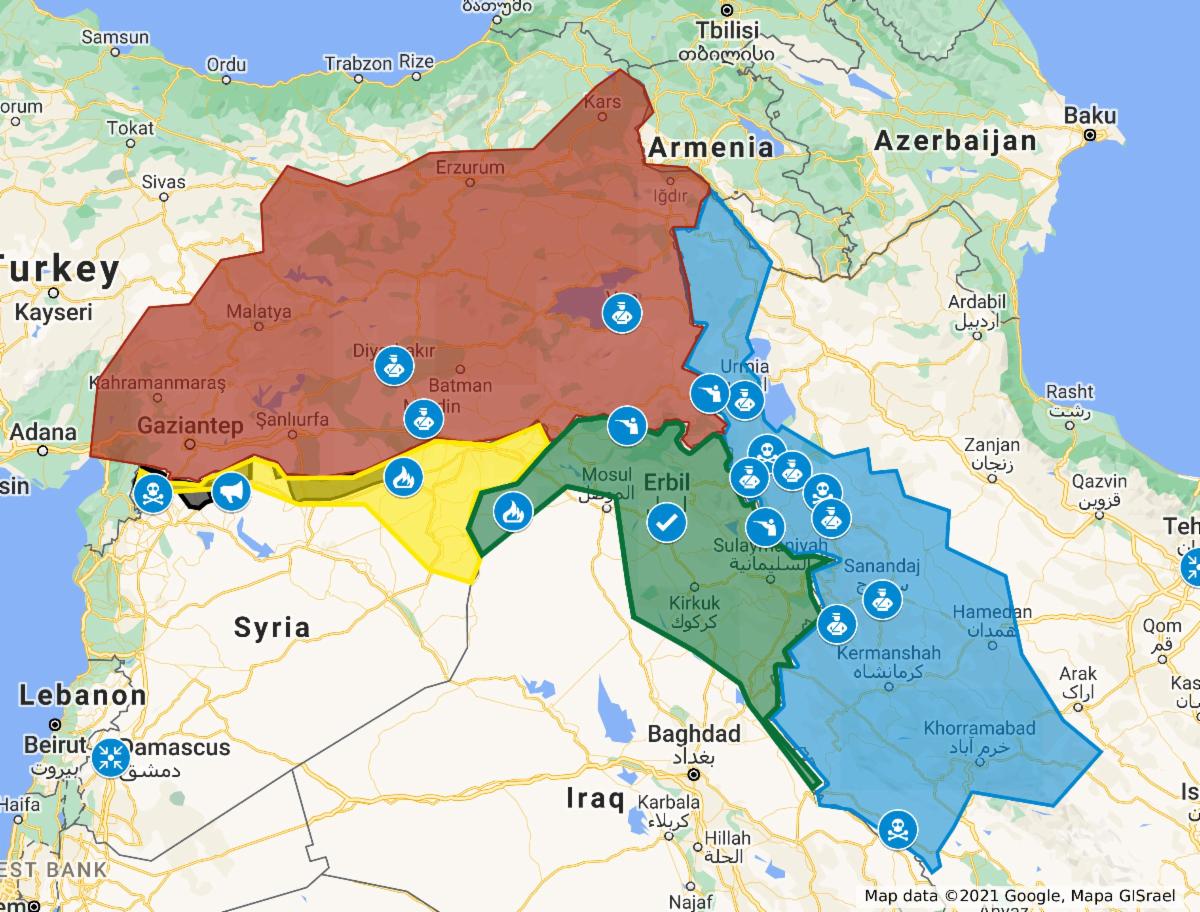
MESOP NEWS : THE INNER-KURDISH WAR (IRAQ) – PKK Roadside Bomb Injures One Peshmerga in Amedi: Statement
ERBIL 18/08/2021 – 13:32 Basnews English
— One Peshmerga soldier was injured on Wednesday after a roadside bomb laid by the Kurdistan Workers’ Party (PKK) near Amedi district of Duhok province, hit their vehicle.
MESOP NEWS : FREIHEITSKÄMPFER ZUM SOZIALAMT / JUNGAFGHANEN
@MENA_WATCH
18.8.2021 – Eine Botschaft aus Moria: „Wir sagen Nein zu den Taliban!“. Afghanische Flüchtlinge im Lager Moria
Replying to @MENA_WATCH
Das Migrationsbusiness soll wieder richtig anlaufen: Von der Osten bis Westen: warum aber bleiben diese tapferen jungen Männer nicht in den prekären Ländern + kämpfen für Demokratie – wie das Europäer Jahrhundertelang gemacht haben – ganz ohne Sozialamt im Rücken ?
MESOP NEWS: THE SILLY GERMAN JOURNALIST No. 1
18.8.2021
„Rechte &Islamisten sind Waffenbrüder im Kampf gegen die offene Gesellschaft, vereint im Hass. Die „Identitären“ – sowas wie die Taliban Europas. Dabei sind sie ja sonst nicht so für den Islam.“
Reply to NILS :
Merke Nils: Das Reh ist die Frau vom Hirsch & Bambi ist das Kind von beiden !
Mehr: www.mesop.de
A weekly brief of events occurred in the Kurdistan regions of Iran, Iraq, Syria, and Turkey.
|
Afghanistan: Schämen Sie sich, Herr Außenminister!
Noch vor wenigen Wochen erklärte Außenminister Heiko Maas: „Die Taliban müssen zur Kenntnis nehmen, dass es ein Zurück ins Jahr 2001 nicht geben wird.“
Da gebe es „auch nichts zu beschönigen“. Es sind dünne Worte angesichts des kolossalen Versagens, für das auch der deutsche Außenminister verantwortlich ist. Wie radikal falsch die Lage auch von ihm eingeschätzt wurde, zeigt eine Rede von Heiko Maas am 23. Juni 2021. In der „Aktuellen Stunde des Bundestages zum geordneten Rückzug der NATO-Truppen aus Afghanistan“ sagte der SPD-Politiker vor knapp zwei Monaten:
- „Vor allem die Taliban müssen zur Kenntnis nehmen, dass es ein Zurück ins Jahr 2001 nicht geben wird.“
- „Menschenrechte sind heute in der afghanischen Verfassung fest verankert, und daran darf auch niemand rütteln.“
- „Frauen führen heute ein viel freieres Leben und bekleiden politische und auch öffentliche Ämter.“
- „Afghanistan verfügt über eigene Sicherheits- und Polizeikräfte, übrigens nicht zuletzt dank des großen Engagements im Rahmen unseres bilateralen Polizeiprojektes.“
- „Auch das wird bleiben von diesem Einsatz: das Bild eines Deutschlands, das sich seiner Verantwortung stellt, das sicherheitspolitisch erwachsen geworden ist, auch in Afghanistan.“
Am Montag erklärte derselbe Außenminister, es sei eine Fehleinschätzung der Alliierten gewesen, dass sich die afghanischen Truppen den Taliban entgegenstellen würden. Es ist nicht bekannt, auf welche Informationen der deutsche Außenminister seine katastrophale Fehleinschätzung der Lage in Afghanistan stützte. Waren es Berater, „befreundete“ Geheimdienste, der BND? Die Frage ist für den Moment irrelevant.
Herr Maas, zeigen Sie einen Funken Verantwortungsbewusstsein
Wenn Heiko Maas wirklich so blind war, dass er die von Menschenrechtlern wie Militärs prophezeite humanitäre Katastrophe nicht sah, nicht sehen wollte, dann hat er versagt. Als Politiker, als deutscher Außenminister, als Verantwortungsträger, als Mensch. Am Montag sagte er, aus der Fehleinschätzung der Lage in Afghanistan müssten „die notwendigen Konsequenzen gezogen werden“. Gehen Sie mit gutem Beispiel voran Herr Außenminister, und ziehen Sie die notwendigen Konsequenzen. Zeigen Sie einen Funken Verantwortungsbewusstsein – und treten Sie zurück.
« neuere Artikel / next articles ältere Artikel / previous articles »