MESOPOTAMIA NEWS : PORTRAITS DES MEDIOKREN  /  16 JAHREMERKEL

PHILIPP PLICKERT :

Aber ich sag’s nochmal: Wem unser Merkel-Buch zu negativ oder kritisch ist, für den gibt es auch eine Alternative:


Anette Schavan (Hrsg): Die hohe Kunst der Politik. “Mit Texten von Annalena Baerbock…”


Schavan | Die hohe Kunst der Politik

Schavan, Die hohe Kunst der Politik, 2021, Buch, Sachbuch, 978-3-451-39086-9. Bücher schnell und portofrei


beck-shop.de

 MESOPOTAMIA NEWS : PORTRAITS DER FEMINISTISCHEN VERBIETERINNEN & STRENGEN ZUCHTMEISTERINNEN – Nina Noblé
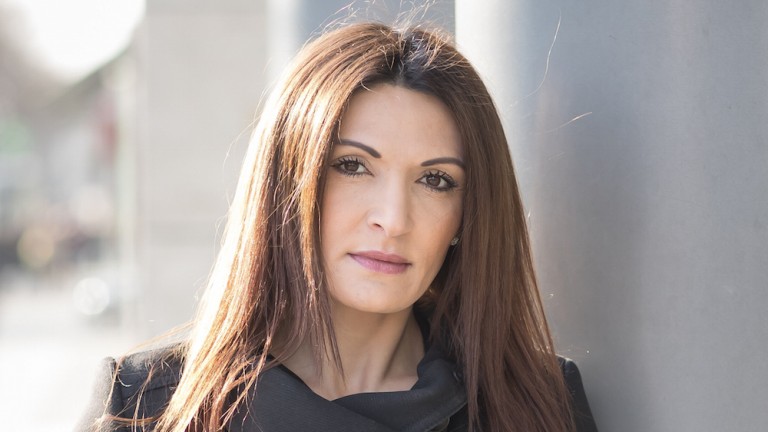
17 Juli 2021 – Wer wissen will wie autoritär, bevormundend und reaktionär das Menschenbild grüner Aktivisten ist, sollte das hier lesen. Es ist wirklich beeindruckend.

Nina Noblé@ninanoblee

“Nur Verbote schaffen eine Dringlichkeit für Veränderung. Solange dem Auto in der Verkehrspolitik so viel Vorrang eingeräumt wird, denken weder die Bürger*innen noch die Politik über Alternativen nach.” https://zeit.de/2021/29/verkehrswende-philipp-amthor-cdu-nina-noble-verbote?utm_referrer=https%3A%2F%2Fwww.google.de%2F

@VBerlinautofrei

www.mesop.de

MESOPOTAMIA NEWS : DIE FETTEN KATZEN KURDISTANS IN TALABANI’S PUK / SÜDKURDISTAN – IRAQ

PKK: „YNK muss ihre Probleme ohne Schaden lösen“

In der zweitstärksten Partei in Südkurdistan, der YNK, herrscht ein Machtkampf. Das Außenbeziehungskomitee der PKK fordert die YNK auf, die internen Konflikte umgehend zu lösen.

  • ANF  BEHDÎNAN  Donnerstag, 15 Jul 2021, 09:28 – In der im Parlament Südkurdistans als zweitstärkste Kraft vertretenen YNK (Yekîtîya Nîştîman Kurdistan – Patrotische Union Kurdistans) tobt ein Machtkampf. Die PKK betont demgegenüber, dass dieser interne Konflikt der YNK einvernehmlich gelöst werden müsse, ansonsten sei vor allem die Türkei die Gewinnerin. Das Außenbeziehungskomitee der PKK hat folgenden Appell an die YNK veröffentlicht:

„Wir erklären unsere Überzeugung und unsere Erwartung, dass die in den letzten Tagen eskalierende Führungskrise in der Yekîtîya Nîştîman Kurdistan auf der Grundlage der vom Parteikongress abgestimmten Vollmachten, im Rahmen des Parteirechts und der nationalen Verantwortung gelöst wird.

weiterlesen / click to continue

MESOPOTAMIA NEWS „FAT CATS“: SHAME & TROUBLE IN THE KURDISH FAMILY / IRAQ – SOUTH KURDISTAN – PUK leadership rift threatens stability in gas rich Sulaimaniya

Security forces in Sulaimaniya were mustered on behalf of respective party leaders as negotiations continue. IRAQI OIL REPORT

14 July 2021 – SULAIMANIYA – The dominant party in Iraqi Kurdistan’s gas-rich region is facing a serious leadership crisis as a simmering family dispute has escalated rapidly, threatening cohesion within the Patriotic Union of Kurdistan (PUK) and order in the territory it de facto governs.

Bafel Talabani, son of the late “Mam” Jalal Talabani, the founder of the PUK and former Iraqi President, last week moved to consolidate authority within the party, which controls a swath of gas rich territory in the eastern half of the Kurdistan Region of Iraq (KRI). The move burst open an internal rift with his cousin Lahur Shaikh Jangi Talabany*, with whom he shares power. The two have served as co-presidents of the PUK since a December 2019 leadership congress.

weiterlesen / click to continue

MESOPOTAMIA NEWS : DIE SCHULDENUNION MUSS ALLE BÜRGER EUROPAS TENDENZIELL KONTROLLIEREN & ENTEIGNEN

Neue Digitalwährung : Die EZB macht den Weg frei für den digitalen Euro

  • Von Christian Siedenbiedel FAZ –  14.07.2021-13:47 – Etwa fünf Jahre veranschlagt die EZB für den digitalen Euro. Der EZB-Rat hat entschieden: Aus den vagen Plänen für eine neue Digitalwährung soll das Großprojekt des digitalen Euro werden. Unter Europas Notenbankern waren die Meinungen dazu durchaus unterschiedlich.

Die Europäische Zentralbank (EZB) macht den Weg frei für den digitalen Euro. Wie die Notenbank am Mittwoch mitteilte, hat der EZB-Rat, das oberste geldpolitische Gremium der Eurozone, den vorläufigen Plänen zugestimmt. Die Politik auf europäischer und nationaler Ebene hatte schon zuvor ihre Unterstützung signalisiert.

weiterlesen / click to continue

MESOPOTAMIA NEWS : THOUSANDS OF AFGHANS PREPARING FOR GOING TO EUROPE / GERMANY

Stream of Afghan asylum seekers reported in eastern Turkey

As the United States continues its troop withdrawal from Afghanistan, disputed reports indicate a rising number of asylum seekers of Afghan origin are crossing Turkey’s eastern border.  – Migrants walk along the shoulder of a highway as they make their way from the Iranian border the city of Tatvan in the eastern Lake Van region of Turkey on Aug. 24, 2020. –

July 13, 2021 – AL MONITOR – DIEGO CUPOLO

ISTANBUL – Videos posted on social media this weekend reportedly showed a stream of asylum seekers entering Turkey through its eastern border with Iran, raising concerns among local officials and humanitarian agencies.

weiterlesen / click to continue

MESOPOTAMIA NEWS : Kurdistan’s Weekly Brief, July 13, 2021

A weekly brief of events occurred in the Kurdistan regions of Iran, Iraq, Syria, and Turkey.
Iran

  • On the 32nd anniversary of the assassination of Kurdish leader and former head of the Democratic Party of Iranian Kurdistan (KDPI), Abdul Rahman Ghassemlou, the Cooperation Center for Iranian Kurdistan’s Political Parties (CCIKP) called for the international community, mainly European nations “in negotiations with Iran,” to revive the murder case against Gassamlou’s killers. The CCIKP went on to describe the election of Ebrahim Raisi as “a serious message of continuation of repression and terror.” Ghassemlou and two other Kurds were assassinated by Iranian agents in Vienna on July 13, 1989.
  • Iranian authorities arrested several Kurdish activists, including Ahmed Sadiqi in Divandarreh, Farshed Nazhad in Baneh, and Omed Walizadeh in Shahin Dej. Several local human rights organizations claimed all of those detained were arrested without a warrant.
  • Iranian border guards killed a Kurdish border porter (Kolbar) named Hamad Aminpiur near Baneh and another named Abdulaziz Hajipour near Urmia. Iranian border guards also wounded three Kolbars near Baneh and another named Ashraf Qadirnia near Marivan. Moreover, the Kurdistan Association for Human Rights (KMMK) reported Iranian authorities tortured dozens of Kolbars after arresting them and confiscating their cargo.
  • Mahabad’s public prosecutor ordered the arrest of the owner of a newly-opened women’s store and five models employed by the store for failing to “respect the dress codes prescribed by Islamic customs, traditions, and laws.” The store is now closed, and the owner and the models are awaiting trial.

Iraq

  • Turkish warplanes and drones struck several locations in Iraqi Kurdistan, including a mountainous area near Dohuk Governorate’s Sheladiz subdistrict and a Christian village in the governorate’s Chamnke subdistrict. Meanwhile, the Kurdistan Region Parliament’s Special Committee for Affected Bordering Areas presented its report on Turkey’s ongoing incursion into Iraqi Kurdistan to Speaker of Parliament Rewaz Fayeq. The report blamed the Kurdistan Workers’ Party (PKK) for maintaining a presence in the region that gives Turkey a pretext for invasion yet also claimed Turkey’s military operations violated “international laws and norms.” Furthermore, the report blamed the Government of Iraq (GOI) for remaining silent and “ignoring” Turkey’s ongoing breach of Iraq’s sovereignty. Lastly, the report acknowledged Turkey’s incursion has destroyed hundreds of Kurdish villages, created a 15-40 km deep occupation zone in Iraqi Kurdistan, and resulted in the establishment of 70 military bases and observation posts so far.
  • Iranian-backed militias’ July 6 attack on Erbil led to the postponement of Greek Prime Minister Kyriakos Mitsotakis’ planned visit to Iraqi Kurdistan. That said, though last week’s attack only caused minor property damage, Erbil International Airport remains a favored target of Iran’s proxies in their unremitting campaign against the US presence in Iraq.
  • A number of non-Kirkuki Arabs attempted to occupy a Kurdish village near Kirkuk Governorate’s Sargaran subdistrict on July 7. While the Arabs had a memorandum signed by Kirkuk’s acting governor, Rakan Saed al Jabouri, that permitted their occupation of the village, Kurdish villagers prevented the takeover. Granted, numerous local issues remain unresolved and the Arabization policies restarted in the “Disputed Territories” on October 16, 2017, remain in effect.

Syria 

  • Turkish-backed Islamists shelled northern Manbij again on Friday and caused no reported casualties. The Syrian Democratic Forces (SDF)-affiliated Manbij Military Council claimed the attack targeted “al-Jat village” with “heavy and medium weapons.” Concurrently, several additional indirect fire attacks targeted Kurdish-controlled territories near Aleppo.
  • The United Nations Security Council voted unanimously to keep the Bab al Hawa crossing on the Turkish-Syrian border open for another six months. However, the US and its allies failed to convince Russia to approve the opening of other crossings, which ensured Bab al Hawa remains the only entry point for humanitarian aid outside of the Assad regime’s control. Amnesty International criticized the decision and called it a “compromise resolution that falls short of humanitarian needs.”
  • The Kurdish-supported Afrin Human Rights Organization reported 35 Kurds have been killed in Turkish-occupied Afrin in 2021 and noted the building of at least 100 settlements for non-Kurds in areas controlled by Turkey and its proxies. Simultaneously, the UK-based Syrian Observatory for Human Rights (SOHR) reported Turkish proxies are still perpetrating kidnappings for ransom, extorting local residents, and looting or destroying local resources.
  • The SDF’s Anti-Terror Units (YAT) announced the capture of three ISIS (Da’esh) terrorists in Deir Ez Zor Governorate’s as Shahaddi. Despite the YAT’s recent success, however, Da’esh remains a threat in the governorate partly due to the Assad regime and its Russian allies’ failure to contain it in Syria’s al Badiya region, where dozens of Syrian Arab Army personnel and Assad regime-allied militiamen have been killed during the last three months.

Turkey

  • On July 7, the European Parliament decisively passed a resolution condemning the Turkish government’s closure case against the pro-Kurdish Peoples’ Democratic Party (HDP) with a vote of 603 in favor, two against, and 67 abstentions. The resolution also denounced the removal and replacement of elected Kurdish mayors and dozens of other anti-democratic measures instituted by the Turkish government.
  • Turkish President Recep Tayyip Erdogan visited the nation’s largest Kurdish province, Diyarbakir (Amed), amid an escort of thousands of police tasked with stifling any protests or dissent. Erdogan went on to hold an indoor event attended by members of his own party, the Justice and Development Party (AKP), where he defended his crackdown on Kurdish politicians and accused the pro-Kurdish People’s Democratic Party (HDP) of having ties with Israel.
  • A Turkish court in Mardin Province sentenced a previously removed Kurdish official from Midyat District, Filiz Işık, to six years and ten months in prison for “membership in a terrorist organization.” Furthermore, Turkish police raided a gathering commemorating the Suruç massacre in Istanbul and arrested 13 people, most of whom were relatives of the deceased. Finally, Turkish authorities arrested 32 members, including 30 in Igdir and two local officials in Urfa and Hakkari.

MESOPOTAMIA NEWS : JEWISH ANTISEMITISM ? –  Poll: 25% of US Jews believe Israel is ‘an apartheid state’

A sizable minority of US Jews believe the worst accusations hurled at Israel, according to a survey commissioned by the Jewish Electorate Institute. – By  i24NEWS and ILH Staff  ISRAEL HAYOM –  Published on  07-14-2021 12:51

A survey of US Jewish voters polled after May’s conflict between Israel and the Hamas-ruled Gaza Strip finds that a quarter believes that Israel is “an apartheid state.”

Also, 34% believe that Israel’s treatment of Palestinians is similar to US racism and 22% believe that Israel is committing genocide against the Palestinians.

The survey of more than 800 self-identified American Jewish voters was conducted between June 28 and July 11 by GBAO Strategies on behalf of the non-partisan Jewish Electorate Institute.

weiterlesen / click to continue

MESOPOTAMIA NEWS INTEL :  Haiti assassination probe uncovers more plotters with United States ties

by Joseph Fitsanakis  14 Juli 2021 INTEL ORG

The United States Drug Enforcement Administration (DEA) has said that at least one of the assailants who killed Haiti’s president, Jovenel Moïse, last week, had been its confidential source in the past. It also appears that one of the middlemen of the operation is a Haitian-born pastor based in the US state of Florida. It was he, according to Haitian police, who hired the assassins through a Venezuelan security company headquartered in Florida. However, this is disputed by the alleged middleman himself, who claims he was “duped”.

weiterlesen / click to continue

MESOPOTAMIA NEWS : PROTESTS ROIL HAVANA AS CUBANS PUSH BACK AGAINST THE REGIME / THE SOUFAN CENTER  14 Juli 2021

Bottom Line Up Front:
  • Thousands of Cubans have taken to the streets this week to organize some of the largest protests seen in the country in decades.
  • Videos circulating on social media show Cuban security forces violently beating protesters before detaining them and hauling them off to prison.
  • Demonstrators rallied against declining living conditions, a lack of goods and government services, and shortages of food, fuel, electricity, and medicine.
  • U.S. President Joseph Biden expressed support for the protesters, noting that “We stand with the Cuban people and their clarion call for freedom…”
Thousands of Cubans have taken to the streets this week to organize some of the largest protests seen in the country in decades. Many of the demonstrators called for freedom from Cuba’s Communist government, which reacted in a predictably draconian fashion, attempting to muzzle the voices of protesters and activists by cutting off communications throughout the country. Prior to the communications blackout, Cubans were circulating videos of protests on social media. The use of cell phones and social media have ensured that protests spread throughout the country, as demonstrators called attention to their demands, even as their compatriots were rounded up and arrested. The government also called for supporters to “defend the revolution” in reference to the 1959 uprising that ushered in Cuba’s Communist rule. The government placed the blame for growing unrest on the United States. Cuban President Miguel Díaz-Canel, who succeeded Raúl Castro in 2018, accused Washington of pursuing a policy of “economic asphyxiation” of the Cuban people for its long-running trade embargo and sanctions regime. Blaming mysterious outside agitators for instability is a favored tactic of regimes from Latin America to the Middle East. Moreover, as the first non-Castro president since 1976 and the first leader of the government who is not a Castro since 1959, Díaz-Canel lacks the same degree of political legitimacy as his predecessors, Castro brothers Fidel and Raúl. Fidel ruled Cuba from 1959 to 2008, and Raúl from 2008 until April 2021 when he stepped down.

Cuban security forces detained over 100 people, including well-known dissidents, human rights activists, and members of Cuba’s opposition movement. The authorities used rubber bullets and tear gas to break up protests throughout the country and established checkpoints using police SWAT units. Videos circulating on social media show Cuban security forces violently beating protesters before detaining them and hauling them off to prison. Many activists are now considered missing, with little information available on their whereabouts. Longtime Cuba-watchers expect the government to continue its heavy-handed response and escalate violence as a means of quelling the protest movement. So far, protesters have not been cowed or intimidated by the authorities measures. Pictures of the late Fidel Castro were desecrated at some of the protests, while in others, police vehicles were destroyed. Looting and vandalism occurred in some parts of the country, a mix of criminal opportunism and pure desperation driven by hunger and survival amid Cuba’s worst economic crisis in decades.

Reflective of other protests that have ebbed and flowed in Latin America over the past several years, demonstrators rallied against declining living conditions, a lack of government services, and shortages of food, fuel, electricity, and medicine, including antibiotics, aspirin, and penicillin. Social and economic challenges have been exacerbated by the COVID-19 pandemic, with inflation soaring, making the cost of basic goods prohibitive for regular citizens. Tourism to Cuba has been hampered by COVID-19, depriving the country of a vital source of revenue. Combined with fiscal mismanagement and longstanding American sanctions, Cuba is suffering from a dearth of foreign currency, a worrisome factor that can foreshadow government failure. The protests are from cross-cutting sections of society and not, as in years past, merely relegated to intellectuals, or from the country’s political opposition. By most accounts, the current protests are the most serious challenge to the Cuban government since the collapse of the Soviet Union in the early 1990s, when Havana lost its most important patron and longtime Cold War ally.

Mexico’s President Andrés Manuel López Obrador called on the United States to suspend the blockade against Cuba on humanitarian grounds. There are now growing concerns that Cuba could begin spiraling out of control in a manner similar to another communist nation in Latin America, Venezuela, Havana’s closest ally in the region. U.S. President Joseph Biden expressed support for the protesters, noting that “We stand with the Cuban people and their clarion call for freedom and relief from the tragic grip of the pandemic and from the decades of repression and economic suffering to which they have been subjected by Cuba’s authoritarian regime.” Praise for Cuban protesters was generated across the aisle in the U.S., a rare bipartisan agreement between Democrats and Republicans, and perhaps reflective of the growing importance of the politically influential Cuban diaspora in American politics.

« neuere Artikel / next articles   ältere Artikel / previous articles »