• Home
  • Impressum
  • Nord-Kurdistan
  • Süd-Kurdistan
  • West-Kurdistan
  • Ost-Kurdistan
  • Nah-Ost
  • Special
  • Dossier
 

Newsletter


Dossier

  • THEO VAN GOGH NEU: NETANJAHUS ISRAEL ABSOLUT SAKROSANKT!

      Kritik an Antisemitismus-Resolution – So kann man Antisemitismus nicht bekämpfen Die Kritik an der Resolution von Ampel und Union wird seit Monaten lauter. Über 600 Unterzeichner machen sich jetzt für einen Gegenentwurf stark. 2.11.2024  Von Daniel Bax  2-11-24 Ist das noch von der Staatsräson gedeckt? Demonstranten in Berlin bei einer Kundgebung gegen den Krieg […]

  • THEO VAN GOGH MEMRI ANALYSE: WITWE NAVALNY et.al. = GROSSER  STREIT & KORRUPTION DER RUSSISCHEN DISSIDENTEN Russische Emigranten-Dissidenten sind nicht das Mittel, um gegen Putins Regime vorzugehen – der Wandel wird nur aus dem Inneren Russlands kommen Oktober 2024 | Von Dr. Vladislav L. Inozemtsev*- Russland | MEMRI Daily Brief Nr. 664 USA   Die […]

MESOPOTAMIA NEWS IN DEPTH : The Fatemiyoun, Imam Ali base and recent moves by US, Russia, Israel and Iran

By SETH J. FRANTZMAN THE MIDDLE EAST CENTER FOR REPORTING AND ANALYSIS   16 May 2020

Recent moves by Iranian-backed Liwa Fatemiyoun (لواء فاطمیون) and Liwa Zainebiyoun, two units of Afghan and Pakistani Shi’ites who serve in Syria with the IRGC, appear to correspond to new tensions between the US, Iran and Israel and may also involve moves by Russia in Syria. At the very least the recent reports indicate not only that the two units are growing more open about their presence between Albukamal and Deir Ezzor and that posturing between Tehran, Moscow, Damascus, Washington and Jerusalem tie into this presence and its ramification.

The two units sit astride a key strategic corridor for Iran and pro-Iranian groups in Syria, including Hezbollah in Lebanon and Kataib Hezbollah in Iraq.

weiterlesen / click to continue

MESOPOTAMIA NEWS : FREIWILLIGE ZWANGSKONTROLLE & ZENSUR  – LAETITI AVIA (PHOTO) DIKTIERT WAS IM LANDE VOLTAIRES ERLAUBT IST + WAS NICHT !

Neues Gesetz in Frankreich : Hohe Bußgelder für Hasskommentare im Netz

  • Von Michaela Wiegel, Paris – FAZ – 14.05.2020-19:45 – In Frankreich können hasserfüllte Verschwörungstheorien etwa zur Corona-Krise und andere beleidigende Beiträge im Netz künftig mit hohen Bußgeldern geahndet werden. Kritiker fürchten durch das Gesetz eine „automatische Zensur“.


weiterlesen / click to continue

US-Abgeordnete Ilhan Omar unter „friendly fire“

Weil sie einen Appell für eine Verlängerung des Waffenembargos gegen den Iran unterzeichnet hat, der auch von der Pro-Israel-Organisation AIPAC unterstützt wird, wird die umstrittene Abgeordnete des US-Repräsentantenhauses nun – mutmaßlich zum ersten Mal überhaupt – von eigenen Anhängern kritisiert. Sie sei eine „Verräterin“.

Von Stefan Frank – HaOlam  14 May 2020

weiterlesen / click to continue

MESOPOTAMIA EWS : DONALD TRUMPS MILITARY PRO PKK(SDF/PYD)

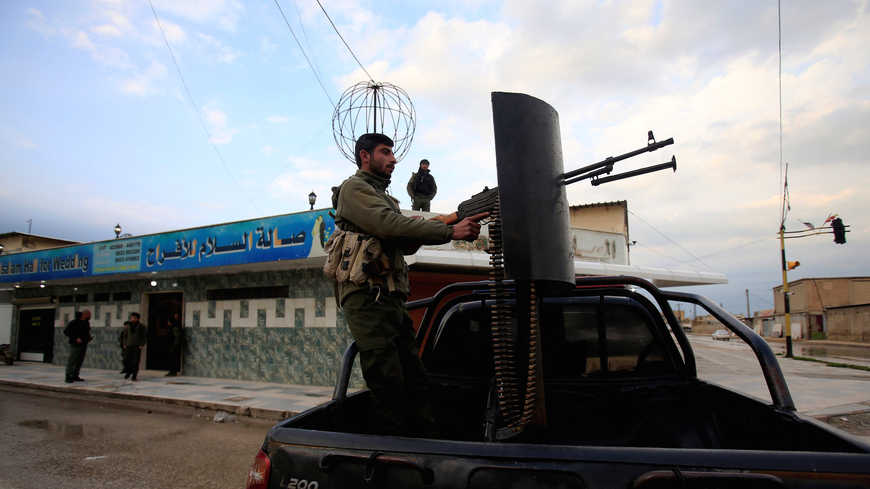
A fighter of Syrian Democratic Forces (SDF) stands on the back of a pick-up truck, with a weapon installed on it, in Qamishli, Syria March 30, 2019. Picture taken March 30, 2019. REUTERS/Ali Hashisho – RC1961AA5550

Pentagon says Damascus, Moscow exploit discontent in Kurdish-controlled Syria

A US military report accuses Russia and the Syrian regime of using Arab discontent in eastern Syria to undermine the Kurdish-led administration. – AL MONITOR –  May 15, 2020

The US military accused Russia and the Syrian government of President Bashar al-Assad of attempting to leverage discontent among Arab populations in eastern Syria to undermine Kurdish-led authorities affiliated with the Syrian Democratic Forces.

A Pentagon Inspector General report released on Wednesday cited CENTCOM as saying that unspecified “state actors in the region” were pressuring civilian populations “to realign and renounce support for the SDF.”

weiterlesen / click to continue

MESOPOTAMIA NEWS SYRIA/EUPHRAT : Once again… Sit-in protesters pelt stones at Russian vehicles of eleventh joint patrol on “M4” highway

Fri 15 May 2020

Sit-in protesters on the Aleppo – Lattakia international “M4” highway, throwing stones and pelting eggs at Russian military vehicles – 14 May 2020 (Enab Baladi) –Yousef Ghuraibi Idlib
Sit-in protesters on the Aleppo – Lattakia international “M4” highway, throwing stones and pelting eggs at Russian military vehicles – 14 May 2020 (Enab Baladi)


Sit-in protesters on the Aleppo – Lattakia international “M4” highway, throwing stones and pelting eggs at Russian military vehicles – 14 May 2020 (Enab Baladi)
14 May 2020
 Yousef Ghuraibi
Sit-in protesters on the Aleppo – Lattakia international“M4” highway, raising signs condemning the passage of the military vehicles of the Russian – Turkish joint patrol on the road controlled by the opposition – 14 May 2020 (Enab Baladi)

Members of the Turkish Army Forces (TAF) standing near a military vehicle while being deployed on the Aleppo – Lattakia international “M4” highway during the eleventh Russian-Turkish joint patrol – 14 May 2020 (Enab Baladi)

 14 May 2020
 Yousef Ghuraibi
 Idlib

MESOPOTAMIA NEWS – WAS ACHILLE MBEMBE UNS VERSCHWIEGEN HAT : WIE ISRAEL DEN RASSISTISCHEN SÜDAFRIKANISCHEN APARTHEID STAAT WAFFENTECHNISCH ÜBER LANGE JAHRE FÖRDERTE

Nukleardeal mit Südafrika Israel soll Apartheid-Regime Atombomben angeboten haben

Israel hat offenbar versucht, dem südafrikanischen Apartheid-Regime Atomwaffen zu beschaffen. Das berichtet der britische “Guardian” auf Basis jetzt aufgetauchter Dokumente. Es wäre der erste schriftliche Beweis für die Existenz israelischer Nuklearwaffen – und damit eine politisch brisante Blamage für Jerusalem. DER SPIEGEL – 24.05.2010, 18.08 Uhr

Atomreaktor in Dimona: Israel soll dem Apartheid-Regime die Bombe in Aussicht gestellt haben

London/Tel Aviv – Israel gilt als Atommacht, auch wenn seine Regierung seit Jahrzehnten die Existenz der Waffen weder bestätigt noch dementiert. Die Politik der Zweideutigkeit bietet einen großen Vorteil: Israel verfügt über nukleares Abschreckungspotential, ohne sich aber dem internationalen Kontrollregime unterwerfen zu müssen. 1986 wurde Israels Atomprogramm bekannt, als der Techniker Mordechai Vanunu entsprechende Informationen öffentlich machte. Erst am Sonntag wurde Vanunu in diesem Zusammenhang erneut verhaftet.

Jetzt aber sind Dokumente aufgetaucht, die Israel gleich auf doppelte Art bloßstellen könnten, sollten sie authentisch sein: Sie wären der erste schriftliche Beweis für die Existenz israelischer Atomwaffen. Und sie würden den Eindruck, Israel gehe verantwortungsvoll mit der Bombe um, ad absurdum führen.


weiterlesen / click to continue

MESOPOTAMIA NEWS : CORONA IN LEBANON / FULL REPORT

Published: 14/05/2020

Overview
  • So far, 870 Lebanese have tested positive for the coronavirus (as of the evening of May 12, 2020). Of them, 234 have recovered and 26 have died. As of today, there are 610 active cases, three in serious or critical condition. To date 53,269 tests to detect the virus have been administered, and 5,353 people are quarantined (websites of the Lebanese ministries of health and information, May 13, 2020).

Until recently the number of reported cases was stable and it seemed that the spread of the disease was under control. Even locations that were potential hotspots, such as the Palestinian refugee camps, reported only isolated cases. However, this past week there was a rise in the number of infections detected, raising concern over a second outbreak, and prompting the Lebanese government to impose a four-day general lockdown on the entire country.

Fear of a second outbreak
  • Between May 8 and 11, 2020, 109 new cases of COVID-19 were detected in Lebanon. The number is relatively high compared with preceding weeks, when days went by with no cases or only isolated cases detected (al-Binaa, May 12, 2020). The graph of daily infection below shows a rise in the number of cases since May 6, 2020, particularly on May 7 and 10. The statistics have been unstable since May 6. However, according to reports from the Lebanese ministry of information, a relatively larger number of tests were administered on May 6, 8 and 12, apparently out of concern over a renewed outbreak.

COVID-19 infections detected in Lebanon between April 30 and May 11, 2020 (website of the Lebanese ministry of information, May 13, 2020)
COVID-19 infections detected in Lebanon between April 30 and May 11, 2020
(website of the Lebanese ministry of information, May 13, 2020)

  • Dr. Hamad Hasan, Lebanese minister of health, said the exaggerated relaxation [of following public health guidelines] and the lack of civilian responsibility, as manifested in the public behavior over the last few days, were behind the potentially disastrous rise in the number of coronavirus infections (interview conducted by al-Joumhouriya, Lebanon, quoted by Radio al-Nur, May 11, 2020). On May 12, 2020, Dr. Assem Araji, member of the Lebanese parliament and chair of its health committee, spoke about the public’s scoffing at the guidelines put in place to protect them from the coronavirus. He said, “Lebanese have to fully understand, for example, that there are 1,300 ventilators and we will not be able use more than half of them for COVID-19 patients if the virus spreads quickly.” He added that “We will be able to contain a large number of cases for one month only, and after that the public health system will collapse” (al-Nashra, Lebanon, May 12, 2020). At a Lebanese government meeting, Lebanese president Michel Aoun said that measures against the spread of the virus had to be enforced more strictly because of the rise in the number of cases in recent days (al-Nashra, May 12, 2020).
  • In view of the above, at noon on May 12, 2020, the Lebanese government decided to impose a general four-day lockdown on the entire country. It was scheduled to begin on the evening of Wednesday, May 13, and continue until the morning of May 18. Its objective is to enable public health teams to test, monitor and quickly isolate all new COVID-19 cases. Exceptions to the lockdown are hospitals and medical centers, as well as the food, industrial and agricultural sectors. In addition, the government instructed the security forces to enforce preventive measures more strongly (social distancing, wearing masks, etc.) and called on the public to follow the guidelines (al-Binaa, al-Nashra, May 12, 2020).
Hezbollah activity to cope with COVID-19[1]
  • Hezbollah made preparations to cope with the virus with its own separate program directed mainly towards the Shi’ite population in the areas under its influence (south Lebanon, the Beqa’a Valley and southern Beirut). In recent weeks no significant changes were noted in the program, and most of the organization’s civilian activity is currently focused on Ramadan events.
The situation in the Palestinian refugee camps[2]
  • The number of reported active cases of COVID-19 in the al-Jalil refugee camp (near Baalbek) has risen to six, reportedly all in stable condition. One woman recovered and was discharged, and was received by fellow camp residents with mass festivities, during which there was no social distancing and no mask wearing. However, so far no cases of the disease were reported in other refugee camps (Safa, May 6, 2020; the Facebook page of the al-Badawi refugee camp, May 6, 2020, al-Jazeera, May 10, 2020).

Picture from the video of the reception held by the residents of the al-Jalil refugee camp for a fellow resident who had recovered from COVID-19 (Facebook page of the al-Badawi refugee camp, May 6, 2020).
Picture from the video of the reception held by the residents of the al-Jalil refugee camp for a fellow resident who had recovered from COVID-19 (Facebook page of the
al-Badawi refugee camp, May 6, 2020).

  • Following the general rise in the number of cases in Lebanon, on May 11, 2020, UNRWA warned that guidelines were not being carefully implemented and preventive measures were being disregarded in several refugee camps in Lebanon. UNRWA also warned of a possible second wave of infections, and asked that the resident of the refugee camps wear masks, practice social distancing and take all other necessary precautions (Palestinian refugee portal, May 11, 2020).
Full document in PDF format

[1] For further information see the April 1, 2020 bulletin, “Hezbollah’s coping with COVID-19: A test case of the conduct of the mini-state established by Hezbollah in Lebanon.” ↑
[2] For further information see the April 12, 2020 bulletin, “The fight against the spread of COVID19 in the Palestinian refugee camps in Lebanon.”
↑

MESOPOTAMIA NEWS FOCUS : Mitglied der Inhaltsaufsicht von Facebook steht erwiesenermassen mit der Muslimbruderschaft in Verbindung

Veröffentlicht am 12. Mai 2020 von Daniel Heiniger

Die jemenitische Friedensnobelpreisträgerin Tawakkol Karman wurde als eines von 20 Mitgliedern des neuen Gremiums ausgewählt, hat aber in der Vergangenheit bereits ihre Unterstützung für die islamistische Organisation bekundet. – Donna Rachel Edmunds, 11.5.2020, Jerusalem Post aus dem Englischen von Daniel Heiniger

Die Mitbegründerin von Journalistinnen ohne Ketten und Friedensnobelpreisträgerin Tawakkol Karman hält am 2. Februar 2018 am Warwick Economics Summit eine Rede. (Bildquelle: Wikimedia Commons)

Ein Mitglied des neuen Aufsichtsgremiums von Facebook, das die Kontrolle über den Prozess der Inhaltsmoderation für die Social-Media-Plattform haben wird, hat in der Vergangenheit laut dem Middle East Media Research Institute (MEMRI) und Medienberichten ihre Unterstützung für die Muslimbruderschaft zum Ausdruck gebracht.

weiterlesen / click to continue

MESOPOTAMIA NEWS INTEL BY MEIR AMIT INTELLIGENCE & TERRORISM INFORMATION CENTER / ISRAEL – Spotlight on Global Jihad (May 7-13, 2020)

Published: 14/05/2020

IED activated against the vehicle of a senior officer in the Afghan NDS (Telegram, May 11, 2020)

IED activated against the vehicle of a senior officer in the Afghan NDS (Telegram, May 11, 2020)

Armored vehicles of the Turkish army and the Russian Military Police during the tenth joint patrol (Idlib Plus Facebook page, May 12, 2020)

Armored vehicles of the Turkish army and the Russian Military Police during the tenth joint patrol (Idlib Plus Facebook page, May 12, 2020)

Explosion of the IED in the Al-Ma’alef area, in south Baghdad (glgamesh.com, May 10, 2020)

Explosion of the IED in the Al-Ma’alef area, in south Baghdad (glgamesh.com, May 10, 2020)

Overview
  • In the Idlib region in northern Syria, the ceasefire is still surviving but the intensity and severity of the incidents have recently been increasing. This week, jihadi organizations affiliated with Al-Qaeda attacked Syrian army positions. This was the most serious incident since the ceasefire agreement between Russia and Turkey. Both sides reportedly sustained dozens of fatalities.
  • In Iraq, ISIS is continuing its intensive activity, taking advantage of the COVID-19 pandemic and the reduced activity of the US-led International Coalition. One noteworthy attack this week was carried out among the Shiite population in Baghdad, when five IEDs were simultaneously detonated. The attack constitutes additional evidence of ISIS’s improved operational capabilities and the increase in its boldness, enabling it to carry out showcase attacks along with its routine guerrilla attacks.
  • The most noteworthy incident in ISIS’s provinces abroad was a suicide bombing attack in the Nangarhar Province in eastern Afghanistan. A suicide bomber blew himself up with his explosive vest among Afghan security forces and a militia that supports them during the funeral procession of a local commander. According to ISIS, over 100 security personnel were killed or wounded.
The Idlib region
Overview

The ceasefire in the Idlib region was violated this week by an attack of jihadi organizations affiliated with Al-Qaeda against positions of the Syrian army and the forces supporting it. This was the most serious incident since the Russian-Turkish ceasefire agreement. There were also exchanges of artillery fire between the Syrian army and rebel organizations. However, the joint patrols of the Syrian and Turkish armies continued in accordance with the ceasefire agreement between them (March 5, 2020). The ceasefire is still maintained but the intensity and severity of the incidents have recently been on the rise.

Jihadi organizations’ attack against Syrian army positions
  • On May 10, 2020, the “Awaken the Believers” operations room, affiliated with Al-Qaeda[1], announced that its operatives had attacked positions of the forces supporting the Syrian army in the northern Al-Ghab Plain (southwest of Idlib). Among others, operatives of the Turkestan Islamic Party (Uyghurs from China) took part in the attack. The attacking operatives seem to have taken control of several positions of the Syrian army and the forces supporting it.

The area in the northern Al-Ghab Plain attacked by jihadi organizations (marked with an icon of an explosion) (Google Maps)
The area in the northern Al-Ghab Plain attacked by jihadi organizations
(marked with an icon of an explosion) (Google Maps)

  • On the evening of May 10, 2020, the Syrian army and the forces supporting it mounted a counterattack and regained control of the positions taken over by the jihadi operatives. In the wake of the attack, the Syrian army fired artillery at several villages in the Al-Ghab Plain. According to the Syrian Observatory for Human Rights (May 10, 2020), at least 37 Syrian soldiers were killed in the clashes, as well as 24 operatives of the jihadi organizations (Syrian Observatory for Human Rights, May 11, 2020).
 Syrian army tank seized by the jihadi operatives (@abdallhhrfan Twitter account affiliated with the rebel organizations, May 11, 2020).   Firing an anti-aircraft gun mounted on a Syrian army vehicle at the jihadi operatives (Sisar1@Sisar110 Twitter account, affiliated with the Syrian and Russian armies, May 10, 2020).
Right: Firing an anti-aircraft gun mounted on a Syrian army vehicle at the jihadi operatives (Sisar1@Sisar110 Twitter account, affiliated with the Syrian and Russian armies, May 10, 2020). Left: Syrian army tank seized by the jihadi operatives (@abdallhhrfan Twitter account affiliated with the rebel organizations, May 11, 2020).
Joint patrols of the Russian and Turkish armies continue
  • Since the Turkish army enforced the Russian and Turkish joint patrols (April 26, 2020), these patrols continued on a regular basis. On May 7, 2020, Turkey and Russia carried out the ninth joint patrol on the M-4 highway (Anatolia, May 7, 2020). The patrol reached the outskirts of the city of Ariha, about 12 km south of Idlib. On May 12, 2020, the tenth joint patrol was carried out (Edlib Plus Facebook page, May 8, 2020). The Headquarters for the Liberation of Al-Sham announced its objection to the joint patrols and support of the protest watches of the residents (Ibaa, May 8, 2020). In practice, there were crowds of demonstrators in the Ariha area while the tenth patrol was carried out but they did not prevent it (Edlib Plus Facebook page, May 12, 2020).
Northeastern Syria
The area of Al-Mayadeen and Albukamal
  • On May 10, 2020, SDF fighters were targeted by machine gun fire about 10 km north of Al-Mayadeen. Two fighters were killed (Telegram, May 11, 2020).
  • On May 9, 2020, an SDF vehicle was targeted by machine gun fire about 45 km south of Al-Mayadeen. The passengers were killed or wounded (Telegram, May 11, 2020).
The Al-Hasakah area
  • On May 7, 2020, an “agent” of the SDF forces was shot and killed about 30 km south of Al-Hasakah (Telegram, May 7, 2020).
  • On May 6, 2020, an SDF fighter was shot and killed about 30 km south of Al-Hasakah. According to ISIS’s statement, he was an operative of the Kurdish Internal Security forces (Telegram, May 7, 2020).
Eastern Syria (Al-Sukhnah-Palmyra region)
  • On May 7, 2020, ISIS attacked a convoy of the Syrian army and the forces supporting it in the desert area northeast of Al-Sukhnah. A total of 11 officers and soldiers of the Syrian army and the forces supporting it were killed and others were wounded (Syrian Observatory for Human Rights, May 7, 2020).
The Iraqi arena

Iraq continues to be the main arena of ISIS’s global activity, while ISIS takes advantage of the spread of COVID-19[2] and the decrease in the scope of activity of the US-led International Coalition. This week, ISIS’s activity continued in the forms characterizing past weeks: activation of IEDs, mortar shell fire, sniper fire, and targeted killings. The most prominent attack was the detonation of five IEDs in Shiite neighborhoods in Baghdad. In addition, this week, ISIS set fire to wheat fields as part of a modus operandi which it calls the “economic war” against its enemies.

ISIS’s Iraq Province taking the lead in ISIS’s activity
  • On May 7, 2020, ISIS released an infographic entitled “The Harvest of the Fighters,” summing up its activity in the various provinces around the world between April 30 and May 6, 2020. A total of 88 attacks were carried out around the world during this time, 72% of them (64 attacks) in Iraq. Syria follows (with only 10 attacks) and then West Africa (seven attacks). The number of casualties caused by ISIS also reflects Iraq’s leading position: the number of casualties in Iraq was 109, compared to 39 in Syria and 30 in West Africa (Telegram, May 7, 2020).
Background and reasons for the increase in the scope of ISIS’s activity in Syria and Iraq
  • Charles Lister, a senior fellow and director of the Countering Terrorism and Extremism Program of the Washington based Middle East Institute (MEI), recently wrote an article addressing the significant increase in the scope of ISIS’s activity in Syria and Iraq[3]:
    • In Syria, there has been an increase in the scope of ISIS’s activity due to a combination of a severe shortage of manpower in the army and the Syrian regime focusing on fighting against other enemies [i.e., against the rebel organizations, mainly the Headquarters for the Liberation of Al-Sham in the Idlib region, which is currently the regime’s top priority].
    • In Iraq, the escalation in ISIS’s activity was made possible due to the combination of the withdrawal of the US forces from strategic key points, abandoning frontline posts to less capable, often divided, and poorly resourced Iraqi security forces; along with the spread of COVID-19, leading to a decrease in the scope of activity of the Iraqi security forces.
  • In these two arenas, the more significant escalation is in Iraq. It occurred in two stages: In the first stage, following the Iraqi government’s announcement on “ISIS’s defeat” in 2017, ISIS operatives temporarily retreated to remote, largely unpopulated areas in order to regroup in advance of resuming action. In the second stage, which is currently underway, ISIS has increased the number of its operatives and the scope of its activity mainly in the governorates of Kirkuk, Diyala and Salah al-Din. Its operatives have also increased the use of sophisticated night-time tactics, suicide bombings, and multi-pronged coordinated assaults. The Iraqi army, on its part, has failed to come up with a proper response due to lack of relevant intelligence.
ISIS’s “economic war” against Iraq
  • According to a report by an Iraqi “security source,” on May 9, 2020, ISIS burnt over 40 dunams of agricultural land in the Khanaqin region, the Diyala Province. On the following day (May 10, 2020), ISIS operatives abducted farmers who were harvesting the wheat (Iraqi News Agency; Al-Sumaria, May 10, 2020).

ISIS did not claim responsibility for setting fire to the fields and abducting the farmers. However, in the ITIC’s assessment, this can be viewed as part of the “economic war” waged by ISIS against its enemies. As part of this war, ISIS recently blew up IEDs to sabotage high voltage lines, including lines supplying electricity from Iran to Iraq.

Detonating IEDs in Baghdad
  • On May 10, 2020, ISIS simultaneously detonated five IEDs among Shiite crowds in south and southeast Baghdad (see map). According to ISIS, 36 Shiites were killed and wounded as a result (Telegram, May 11, 2020).
  • An Iraqi “security source” reported that the Iraqi security forces had neutralized another IED planted in a car in an open market in northeast Baghdad. Thus, a sixth terrorist attack which was supposed to take place on the same day was thwarted. According to the Iraqi version of the events on that day, there were far fewer casualties than stated by ISIS (one killed and about 10 wounded) (Al-Sumaria, May 10, 2020).

The Shiite areas where IEDs were detonated in Baghdad: Al-Amin neighborhood (marked in pink), Al-Amel neighborhood (marked in black), Al-Za’afraniyah (marked in blue), Abu Dashir neighborhood (marked in red), and the Al-Ma’alef area (marked in purple).

In the ITIC’s assessment, the combined attack in Baghdad was intended to cause as many casualties as possible among the Shiite population, undermine security in the Iraqi capital, and signal to the Iraqi regime and the entire Iraqi public that ISIS’s audacity was growing stronger and its operational capabilities were improving. Even if these goals were not achieved in full, the attacks indicate that concurrently with its “routine” guerrilla activity, ISIS strives to carry out showcase attacks with political and media repercussions in the Iraqi arena.

Additional activity carried out by ISIS’s Iraq Province during the past week

Diyala Province

  • On May 11, 2020, a Popular Mobilization force was targeted by machine gun fire. Two Popular Mobilization operatives were killed and another was wounded (Telegram, May 12, 2020).
  • On May 10, 2020, an IED was activated against a Popular Mobilization vehicle about 4 km north of Khanaqin. Two Popular Mobilization fighters were killed and two others were wounded (Telegram, May 12, 2020).
  • On May 7, 2020, a policeman was targeted by sniper fire about 20 km northeast of Baqubah. He was killed (Telegram, May 7, 2020). The policeman who was killed reportedly served in the Iraqi government’s counterterrorism unit (Al-Sumaria, May 7, 2020).
  • On May 7, 2020, an IED was activated against a vehicle of the Iraqi government’s counterterrorism unit about 50 km northeast of Baqubah. The passengers were killed or wounded (Telegram, May 8, 2020).

Kirkuk Province

  • On May 11, 2020, an IED was activated against an Iraqi police vehicle about 40 km southwest of Kirkuk. All the passengers were wounded (Telegram, May 11, 2020).
  • On May 4, 2020, ISIS operatives ambushed a Tribal Mobilization vehicle about 40 km southwest of Kirkuk. During the attack, they fired machine guns and activated an IED. Four Tribal Mobilization operatives were killed and others were wounded. In addition, weapons and ammunition were seized (Telegram, May 6, 2020).

Baghdad Province

  • On May 7, 2020, a Popular Mobilization commander was targeted by gunfire about 20 km southeast of Baghdad. He was killed (Telegram, May 8, 2020).

Babel Province

  • On May 7, 2020, a sticky bomb attached to an Iraqi policeman’s car was detonated about 20 km southwest of Baghdad. He was killed (Telegram, May 9, 2020).

Salah al-Din Province

  • On May 10, 2020, a Popular Mobilization force was attacked. Three Popular Mobilization fighters were killed (Telegram, May 12, 2020).

Erbil Province

  • On May 11, 2020, a Kurdish Peshmerga fighter was targeted by machine gun fire about 50 km southwest of Erbil. He was killed (Telegram, May 12, 2020).

Al-Anbar Province

  • On May 10, 2020, an IED was activated against an Iraqi army vehicle in an area west of Hit, about 140 km northwest of Baghdad. Two soldiers were killed (Telegram, May 12, 2020).
Counterterrorist activities by the Iraqi security forces

Nineveh Province

  • On May 11, 2020, the Popular Mobilization announced that it had attacked 15 ISIS operatives during a security operation throughout the province (Al-Sumaria, May 11, 2020).
MESOPOTAMIA NEWS  – ALLE THE WAY WITH CORONA — Top of the Agenda

WHO: Coronavirus ‘May Never Go Away’
14 May 2020 The coronavirus may never be completely eradicated (CNN) and could instead join the group of viruses that appear every year, according to a top World Health Organization (WHO) official. Mike Ryan, executive director of the WHO’s health emergencies program, said the virus “may never go away,” likening it to HIV in that sense.

The novel coronavirus disease has ravaged the globe, sickening more than four million people and killing nearly three hundred thousand to date. The WHO also said that the pandemic could trigger a mental health crisis (Reuters). The warnings come as some countries and U.S. states begin to ease lockdown measures.

Analysis


“Everyone wants to know when we’ll be safe from COVID-19. The answer is we’re probably in for a long fight,” writes former U.S. Food and Drug Administration Commissioner Scott Gottlieb in Time.
 
“Much about the disease remains poorly understood, but countries that are locked down now could very well face new and even more severe outbreaks down the road. If these countries follow the Swedish path to herd immunity, the total cost of the pandemic will decrease, and it will likely end sooner,” Nils Karlson, Charlotta Stern and Daniel B. Klein write for Foreign Affairs.
​


« neuere Artikel / next articles   ältere Artikel / previous articles »