- Andrew Rosenbaum AHVAL NEWS – 18. Apr 2021 09:26 Uhr
- Abgeordnete der Republikanischen Volkspartei (CHP) und der deutschen Partei Die Linke haben in ihren jeweiligen Parlamenten Ermittlungen wegen angeblicher Unterstützung der türkischen Regierungsparteigemeinden bei der illegalen Einreise nach Europa eingeleitet, berichtete die Tageszeitung BirGün am Sonntag.
Die parlamentarischen Untersuchungen von Orhan Sarbal und Gökay Akbulut folgen einer Reihe von Berichten über Türken, die mit einem speziellen Reisepass nach Deutschland reisen, um Reisen zu ermöglichen, die von den regierenden Gemeinden der Partei für Gerechtigkeit und Entwicklung (AKP) erleichtert werden, um dann nie zurückzukehren.
Anfang April ergaben Aktivitätsberichte für 2020 aus der Gemeinde Yesilyurt in der südöstlichen Provinz Malatya im September eine Reise nach Deutschland. Von den 45 Teilnehmern der Reise konnten 43 aus unbekannten Gründen nicht nach Hause.
weiterlesen / click to continue
Deputies from Turkey’s Republican People’s Party (CHP) and Germany’s Die Linke have launched inquiries in their respective parliaments over claims that Turkey’s ruling party municipalities have aided several hundred people to cross into Europe illegally, daily BirGün reported on Sunday.
The parliamentary inquiries by Orhan Sarıbal and Gökay Akbulut follow a string of reports on Turks travelling to Germany with a special passport for trips facilitated by ruling Justice and Development Party (AKP) municipalities, only to never return.
Earlier in April, activity reports for 2020 from the Yeşilyurt municipality in Turkey’s southeastern Malatya province revealed a trip to Germany in September. Of the 45 participants on the trip, 43 failed to come back home for unknown reasons.
weiterlesen / click to continue
Nach anfänglichen Dementis hat der Iran zugegeben, dass er den Einsatz von Tausenden von Zentrifugen sowie umfangreiche Aspekte seines Stroms durch den Vorfall vom 11. April verloren hat. – Von YONAH JEREMY BOB – JERUSALEM POST – 18. APRIL 2021 16:51 UHR
Hat Israels mythischer Geheimdienst, der Mossad,letzte Woche seinen besten Schuss auf die Verlangsamung des iranischen Atomprogramms gemacht und verfehlt?
Obwohl Israels Anhänger der Spionageagentur die ganze Woche über zu dem Vorfall in Natanz am 11. April gratulierten (über welche Quellen berichteten die Jerusalem Post und andere, dass sie involviert waren), die Teherans Atomprogramm angeblich um neun Monate zurückdrängten, könnte dies ein Fall sein, die Schlacht zu gewinnen, aber den Krieg zu verlieren.
Wer auch immer die Sabotage des Atomprogramms der Islamischen Republik am 11. April durchgeführt hat, hat dies getan, um zwei Ziele zu erreichen:
weiterlesen / click to continue
After initial denials, Iran has admitted that it lost the use of thousands of centrifuges plus extensive aspects of its electricity from the April 11 incident. – By YONAH JEREMY BOB JERUSALEM POST – APRIL 18, 2021 16:51
Did Israel’s mythic intelligence agency, the Mossad, take its best shot at slowing Iran’s nuclear program last week and miss?
Although Israel’s supporters were complimenting the spy agency all week on the incident at Natanz on April 11 (about which sources told The Jerusalem Post and others that it was involved), which supposedly set back Tehran’s nuclear program by nine months, this may be a case of winning the battle but losing the war.
Whoever carried out the April 11 sabotage of the Islamic Republic’s nuclear program did so to achieve two goals:
One was to set back Iran’s clock for how quickly it could potentially break out to a nuclear program. Allegedly, Natanz’s centrifuges for enriching uranium were to be off-line or unusable for nine months.
The second broader goal was to eliminate Tehran’s bargaining leverage at the negotiating table with the US and world powers so that Washington would feel less pressure to rush a return to the 2015 nuclear deal and only return if it received significant concessions.
After initial denials, Iran has admitted it lost the use of thousands of centrifuges plus extensive aspects of its electricity from the April 11 incident.
But within days, the Islamic Republic was claiming it would make a major jump in uranium enrichment to the 60% level.
weiterlesen / click to continue
Main events of the past week
- ISIS’s activity in Africa was noteworthy this week as well. In Nigeria, ISIS operatives attacked, for the third time in the past month, the town of Damasak, near the border between Nigeria and Niger. After attacking a military base in the town and setting fire to the soldiers’ barracks, they spread throughout the town and set fire to government buildings and buildings belonging to international organizations. In another incident, ISIS operatives attacked a Christian village close to the border between Nigeria and Cameroon. They killed and abducted inhabitants, and set fire to churches, houses and government buildings. In the Democratic Republic of the Congo, ISIS attacked military camps and a truck convoy of Christian residents. In Chad, 16 soldiers were killed when ISIS ambushed several boats carrying soldiers along the coast of Lake Chad.
- Syria witnessed a decrease in the scope of ISIS’s activity this week. ISIS operatives released 46 people abducted in the Aqirbat region. Police officers and several civilians suspected of collaboration with the Syrian regime are still held by ISIS. Russian fighter jets attacked ISIS targets in the area. In the Deir ez-Zor-Al-Mayadeen region, ISIS operatives continued their attacks against SDF fighters and forces supporting them and against their headquarters.
- Iraq also witnessed a decrease in the scope of ISIS’s activity this week. A noteworthy incident was an attack against an Iraqi army camp north of Baghdad. The Iraqi security forces continued their counterterrorism activity.
- In Afghanistan, ISIS continued its activity mainly against security personnel and government officials. According to an “official Afghan source,” the Afghan security forces detained Gholam Nasser, codenamed Al-Khorasani, who was a senior ISIS commander in Kabul. The Taliban are threatening the United States not to postpone the withdrawal of US forces from Afghanistan.
The Syrian arena

Syrian governorates (freeworldmaps.net)
The Deir ez-Zor-Al-Mayadeen region
- ISIS operatives continued to carry out attacks in the region, mainly against SDF forces and government officials affiliated with them. An attack in Shahil, about 10 km north of Al-Mayadeen, was noteworthy. ISIS operatives fired rockets at an SDF headquarters. The building sustained damage. Subsequently, ISIS ambushed the rescue forces arriving on the scene and activated an IED against them. Four SDF fighters, including a commander, were killed, three others were wounded, and a vehicle was destroyed. Following are other noteworthy attacks based on ISIS’s claims of responsibility:
- On April 12, 2021, an SDF intelligence operative was targeted by gunfire in Diban, about 3 km east of Al-Mayadeen.
- On April 8, 2021, an IED was activated close to the house of the mayor of Al-Harmushiyah, about 20 km northwest of Deir ez-Zor. The house was damaged.
- On April 8, 2021, an SDF fighter was targeted by gunfire in the Mahaimida region, about 10 km north of Deir ez-Zor.
- On April 5, 2021, a hand grenade was thrown at the SDF headquarters in the Abu Hamam region, about 25 km southeast of Al-Mayadeen. Two fighters were wounded.
The desert region (Al-Badia)
- On April 7, 2021, ISIS operatives released 46 people abducted by them the day before in the Aqirbat region, about 40 km east of Salamiyah. A total of 13 police officers and several Syrian civilians suspected of collaboration with the Syrian regime are still held by ISIS (Syrian Observatory for Human Rights, April 11, 2021).
Al-Hasakah region
- An IED was activated against an SDF truck carrying logistical equipment south of Al-Hasakah, near the Syrian-Iraqi border. An SDF fighter was killed and two others were wounded.
Russian airstrikes
- Russian fighter jets attacked ISIS targets in the Al-Sukhnah region, about 120 km southwest of Deir ez-Zor (www.hawarnews.com, April 11, 2021).
The Iraqi arena

Provinces of Iraq (Wikipedia)
- ISIS continued to carry out attacks mainly against the Iraqi security forces and the militias supporting them. This week, there was a decrease in the number of attacks. Most of them were carried out in the Kirkuk region. Following are noteworthy attacks based on ISIS’s claims of responsibility.
Diyala Province
- On April 7, 2021, an IED was activated against a Shiite civilian (“polytheist objector”) in the Miqdadiya region, about 40 km northeast of Baqubah. He was wounded.
Kirkuk Province
- On April 11, 2021, a Tribal Mobilization outpost was targeted by gunfire in southern Daquq, in the southern part of Kirkuk. One fighter was killed and another was wounded.
- On April 10, 2021, an Iraqi police outpost was targeted by gunfire in southern Daquq. One policeman was killed.
- On April 5, 2021, an Iraqi police outpost was targeted by gunfire in the Riyad region, southwest of Kirkuk. One policeman was killed.
Salah al-Din Province
- On April 12, 2021, an Iraqi army intelligence operative was targeted by gunfire in Um al-Zuhur, near Tarmiyah, about 30 km north of Baghdad. Several days before (April 9, 2021), an Iraqi army camp in the area was targeted by rocket and machine gun fire. A lieutenant colonel was wounded.
Nineveh Province
- On April 10, 2021, an IED was activated against an Iraqi army vehicle south of Mosul. The passengers on board were wounded.
Counterterrorism measures in Iraq
International support
- Popular Mobilization Forces Chairman Falih al-Fayyadh met in Moscow with Nikolai Patrushev, the Secretary of the Security Council of Russia. They discussed regional security issues and future cooperation on security issues between Iraq and Russia. During his visit, Al-Fayyadh also met with Russian Deputy Foreign Minister Mikhail Bogdanov. They discussed possible cooperation in the fight against terrorism (Al-Sumaria, April 7, 2021).
- Iraqi National Security Advisor Qassem al-A’raji said that the United States had undertaken to withdraw a considerable part of its forces from Iraq. According to him, both parties agreed that the Iraqi security forces would be able to fight against ISIS. He noted that the parties agreed that there would be no foreign bases in Iraq (Al-Sumaria, April 7, 2021). In this context, Qais al-Khazali, the secretary-general of Asaib Ahl al-Haqq (pro-Iranian Shiite militias operating in Iraq), released a statement, according to which Iraq does not need foreign forces to defend its territory, and the US presence in Iraq constitutes “occupation and a blatant violation of Iraqi sovereignty” (Qais al-Khazali’s Twitter account, April 7, 2021).
Detention of ISIS operatives arriving from the Al-Hawl camp
- Last week, there were two incidents of Iraqi security forces detaining ISIS operatives who arrived in Iraq from the Al-Hawl camp in Syria (a detention facility of families of ISIS operatives where about 60,000 people are held):
- On April 8, 2021, the security forces in Mosul detained three ISIS operatives who arrived in Iraq from the Al-Hawl camp. The man who smuggled them into Iraq was detained as well (Al-Sumaria, April 8, 2021).
- Kurdish security sources reported that the Iraqi Counterterrorism Unit had detained five ISIS operatives from Iraq who infiltrated into the Kurdish zone of northeastern Iraq. The five arrived from the Al-Hawl camp in Syria. In their interrogation, they admitted planning to carry out attacks which included the detonation of IEDs and targeted killings in Erbil, the capital city of the Kurdish region (VOA, April 12, 2021).
Diyala Province
- Five ISIS operatives were killed in the Hamrin region, about 50 km northwest of Baqubah, in a military operation carried out by the Iraqi security forces. They also destroyed ISIS infrastructure (Al-Sumaria, April 11, 2021).
Nineveh Province
- According to Iraqi Armed Forces Spokesman Yahya Rasoul, 60 ISIS operatives were killed in airstrikes carried out on March 25, 2021, in the Makhmur region, about 70 km southeast of Mosul. The airstrikes were based on information provided by ground forces of the counterterrorism unit (Al-Hurra, April 7, 2021). An article in ISIS’s Al-Naba’ weekly describes the reports of the Iraqi security forces as “lies.” According to ISIS, its operatives were not harmed in the attacks, and the main outcome of the operation was “increasing the economic damage to the Iraqi government due to the heavy expenses of fighting against ISIS” (Al-Naba’ weekly, Telegram, April 8, 2021).

Al-Naba’ weekly, Telegram, April 8, 2021Al-Anbar Province
- The Iraqi army located a vehicle near Hit, in western Iraq, which was apparently used by ISIS. The soldiers found 24 rockets inside the vehicle (Al-Sumaria, April 8, 2021).
The Sinai Peninsula
- According to a report in Al-Araby al-Jadeed, in recent weeks, concurrently with the withdrawal of ISIS from the northern Sinai Peninsula, there was considerable activity by operatives of ISIS’s Sinai Province in central Sinai. Tribal sources and eyewitnesses reported that ISIS operatives had recently deployed in the Bir al-Abd region and further south, near Jabal Maghara. Due to the mountainous, rocky terrain it is difficult to locate ISIS operatives hiding there or attack them from the air. There population in the area is sparse, and almost no military presence can be of help. A source in the tribal groups supporting the Egyptian army in the region said that due to the increase in the number of ISIS operatives in the area, the Sinai Tribal Union, in coordination with the Egyptian army forces, had sent reinforcements to the tribal groups. It was further reported that the tribal groups had informed the Egyptian authorities of ISIS’s buildup in central Sinai and the fact that the operatives are close to strategic facilities and important military outposts in the region, including an airport (Al-Araby al-Jadeed, April 10, 2021).

The secretary general of the World Forum for Proximity of Islamic Schools of Thought (second on the left) in a meeting with senior Iraqi Shia clerics and the Iranian ambassador to Baghdad. Source: the website of the Forum, April 8

The meeting between the senior adviser to the speaker of the Majlis with the Syrian ambassador to Tehran. ( Website of the Majlis, April 8 2021)

Esmail Qa’ani, the Commander of the IRGC’s Qods Force. ( al-Alam, April 6 2021 )

The meeting between the Iraqi national security adviser and the secretary of the Iranian Supreme National Security Council( ISNA, April 12 2021)
Overview
- In mid-April, the senior adviser to the Iranian minister of foreign affairs met with the special envoy of the Russian president to the Middle East and with the UN special envoy to Syria and discussed developments in Syria, and particularly the negotiations concerning the settlement of the war.
- Iranian news websites reported that the wife of the Syrian president, Asmaa’ al-Assad, recently acted to stop the activities of private companies in Syria that are linked to Iranian investors. According to this report, whose reliability is unclear, the president’s wife moves were carried out in coordination with the Russian embassy in Damascus and are intended to reduce Iran’s involvement in Syria’s economy.
- On April 5-6, the commander of the Qods Force of the Islamic Revolutionary Guards Corps (IRGC) visited Iraq and met with senior Iraqi officials and heads of parties and political blocs in the country. His visit was conducted against the backdrop of another round of the strategic dialogue between Iraq and the United States, which was held last week. The Associated Press news agency reported that in parallel to this visit, the Iraqi Prime Minister, Mustafa al-Kazimi, sent a stern message to Iran, demanding that Tehran restrain the pro-Iranian militias operating in his country.
- On April 12, the Iraqi national security adviser arrived for a visit in Tehran, during which he met with the secretary of the Supreme National Security Council, the minister of defense and minister of foreign affairs of Iran. The Iranian officials stressed in their meeting with the high-ranking Iraqi official the need to expedite the withdrawal of U.S. forces from Iraq. The issue of the American pullout from Iraq was also discussed in a phone call, held on April 14, between the Iranian and Iraqi presidents, on the occasion of the start of the month of Ramadan.
Iranian Involvement in Syria
- On April 8, the Adviser on Foreign Affairs to the Speaker of the Majlis, Hossein-Amir Abdollahian met with the Syrian Ambassador to Tehran, Shafik Dayoub. Abdollahian condemned the American sanctions imposed on Syria, labeling them “economic terrorism.” He declared that Syria is at the forefront of the “Resistance Front” and that Iran will continue to stand by Syria, the Syrian people and the Syrian leadership. He called for bolstering parliamentary cooperation between the two countries and remarked that soon parliamentary delegations from both countries will exchange visits between Tehran and Damascus. The Syrian ambassador expressed full support for Iran’s stance in the negotiations concerning the Joint Comprehensive Plan of Action (JCPOA, the Iran nuclear deal) and its demand for a complete lifting of economic sanctions levied against it. He also thanked Iran for its unyielding support for Syria (ISNA, April 8).
- On April 13, Ali-Asghar Khaji, the Senior Adviser of the Iranian Minister of Foreign Affairs, met with the Russian Deputy Foreign Minister and Special Envoy of the Russian President to the Middle East, Mikhail Bogdanov, and discussed developments in Syria and Yemen. The two discussed the ongoing negotiations concerning the settlement of the war in Syria (Tehran Times, April 13). On April 15, Khaji met with the UN Special Envoy to Syria, Geir Pedersen, and discussed the talks in the political track focused on ending the war in Syria, and the discussions of the constitutional committee (Tasnim, April 15).
- Rostam Qasemi, the former Iranian Minister of Oil during the presidency of Mahmoud Ahmadinejad, addressed in an interview to Iranian television the Iranian investments in Syria and Iraq. He remarked that in Iraq, Iran’s intervention did not cost anything, while in Syria, Iran received a compensation for its expenses through “thousands of billions of tonnes” of phosphates that Syria is supposed to provide to Iran as part of a deal signed between the two countries (Asr-e Iran, April 9). A commentary published on the website Asr-e Iran (April 10) criticized the statements of the former minister, stating that the data he provided concerning the amount of phosphates in Syria are baseless and that the amount of phosphates in mines worldwide is merely 65 billion tonnes, and 50 billion of them are under Moroccan soil. The website quoted a statement from the Syrian minister of oil who reported that the amount of phosphates on Syrian soil adds up to merely three billion tonnes. In addition, under agreements Syria signed with Russian and Serbian companies, Syria is obligated to provide them with millions of tonnes of phosphates per year. The only deal signed between Iran and Syria in June 2018 concerning Iranian investments in the phosphate mines in Syria, is yet to be realized. Following the criticism, Qasemi corrected himself. In a tweet on his Twitter account (April 10), the former minister of oil clarified that in accordance with the strategic agreement between Tehran and Damascus, Syria is supposed to provide over a billion (one thousand million) tonnes of phosphates to Iran, and not the number he erroneously mentioned during the interview (one thousand billion).
- Iranian news websites reported that the wife of the Syrian president, Asmaa’ al-Assad, moved against Iranian economic interests in the country. According to this report, whose reliability is unclear, the wife of the Syrian president issued an order to dissolve a number of private companies and stop their activity in Syria, and asked to carry out financial and legal audits of these companies, which are linked to Iranian investors. The first lady justified the instruction by mentioning international sanctions placed on these companies. According to the report, the companies whose work was halted are Bunyan Dimashq, al-Bunyan, Ermitaj al-Omran and Qala’I, which are all connected to the Iranian embassy in Damascus. The report also claimed that the steps taken by Asmaa’ al-Assad were carried out in coordination with the Russian embassy in Damascus and are intended to decrease Iran’s clout in Syria’s economy (Aftab News, April 10).
- The pro-opposition Syrian news outlet Deir Ezzor 24 reported (April 13) that the IRGC is working to recruit local Syrians who defected from the ranks of the Syrian opposition and regularized their status (“reconciled”) with the Syrian regime. According to this report, whose reliability is unclear, the recruitment office is located at the old building of the educational directorate in Deir Ezzor. The new recruits obtain greater benefits than they would receive had they gone to serve in the Syrian Army: their service for the IRGC will be recognized as part of the duration of their compulsory military service, they will operate only in the environs of Deir Ezzor, they will serve only 15 days every month, they will obtain a monthly salary of 90,000 Syrian liras, and food baskets.
Iranian Involvement in Iraq
- The Iranian television channel in Arabic, al-Alam, reported (April 6) that the Commander of the Qods Force, Esmail Qa’ani, conducted a visit to Iraq, on April 5-6, during which he met with senior Iraqi officials, and leaders of political parties and blocs, and discussed expanding bilateral ties between Iran and Iraq and other regional issues. No additional details were provided concerning the visit and the issues under discussion.
- The website al-Araby al-Jadeed reported (April 7) based on a political source that Qa’ani’s meetings in Baghdad were largely focused on the strategic dialogue between Iraq and the United States held last week. According to the source, Qa’ani stressed that the demand for the withdrawal of U.S. forces from Iraq must be the central issue under discussion in the dialogue. Meanwhile, the AP news agency reported (April 7) citing two senior Iraqi sources, that against the backdrop of Qa’ani’s visit in Baghdad, the Iraqi Prime Minister, Mustafa al-Kazimi, conveyed a stern message to Iran, demanding that it restrain the pro-Iranian militias in Iraq. According to this report, al-Kazimi also threatened to use force against the armed groups, and clearly identify their foreign sponsor if their attacks on American targets in Iraq persist.
- On April 12, the Iraqi National Security Adviser, Qassim al-Araji, arrived for a visit in Tehran, at the invitation of the Secretary of the Supreme National Security Council of Iran, Ali Shamkhani. During his visit, al-Araji met with Shamkhani and the two discussed bilateral relations and regional and international developments. During the meeting, Shamkhani declared that the United States is the central cause for instability and organized terrorism in the region, and that accelerating the withdrawal of U.S. forces from Iraq will increase the region’s stability. He expressed concern about the reinvigoration of elements connected to ISIS in Iraq, and blamed the United States of supporting those elements, in an effort to prepare the ground for maintaining U.S. military presence in the country. Shamkhani also called for bolstering coordination between Tehran and Baghdad against the activities of “anti-revolutionary and terrorist elements” in northern Iraq, and for greater cooperation in the struggle to fight networks smuggling weaponry and drugs across borders.
- The Iraqi national security adviser praised Iran’s role in establishing stability and security in the region, as well as its involvement in the fight against terrorism, and stressed the need to bolster cooperation between the two countries. He remarked that the Iraqi government is committed to implementing the law passed by the Iraqi parliament concerning the withdrawal of foreign forces from Iraq. He added that there are ongoing talks between Iraq and the countries maintaining a military presence in the country, concerning setting an agreed-upon timetable for the withdrawal of foreign troops (Tasnim, April 12). During his visit in Tehran, the Iraqi national security adviser also met with the Iranian Minister of Foreign Affairs, Mohammad Javad Zarif, and with the Minister of Defense, Amir Hatami (Fars, April 12). Hatami conveyed to al-Ariji that the withdrawal of American forces will help bolster the stability and security in Iraq and called for expanding security cooperation between Iran and Iraq (Mehr, April 13).
- On April 14, the Iranian President, Hasan Rouhani, spoke on the phone with the Iraqi President, Barham Salih, and congratulated him on the occasion of the start of the holy month of Ramadan. Rouhani stressed Iran’s support for the stability, security, independence and territorial integrity of Iraq, and declared that Iran sees Iraq’s security as its own and opposes any foreign meddling in Iraq’s domestic affairs. He remarked that the security of the region ought to be safeguarded by the countries of the region. Rouhani added that the Americans have always played a destructive role in the region, and that their presence did not contribute to bringing about peace and stability. The Iranian president also called for implementing the economic agreements signed between Iraq and Iran, including completing laying the railway connecting Shalamcheh in western Iran to Basra ins southern Iraq. The Iraqi president describe the relations between the two countries as “strategic” and stressed the need to bolster them in all fields, and particularly in the economic and commercial spheres. He remarked that the Iraqi government is determined to implement the decision to end foreign presence in the country, and that it will continue to hold sessions of the strategic dialogue with the United States on this matter, until the final result is achieved (Khabar Online, April 14).
- On April 10, the Iranian Minister of Cooperatives, Labor and Social Welfare, Mohammad Shariatmadari, arrived for a three-day visit in Iraq. On the eve of his visit, the Iranian Ambassador to Baghdad, Iraj Masjedi, stated that the minister is expected to sign a five-year bilateral cooperation agreement and discuss various issues, including exchanges of delegations and experts, vocational training, entrepreneurship, labor relations and social matters. During his visit in Baghdad, Shariatmadari met with the Iraqi Minister of Labor and Social Affairs, Adel al-Rikabi, and with the Minister of Finance, Ali Alawi. The Iraqi minister of finance vowed to Shariatmadari that Iraq’s debts to Iran for the supply of electricity and gas will be paid soon. During his visit in Iraq, the minister also visited southern Iraq, including the city of Karbala, considered holy by Shia Muslims (IRNA, April 10-11).
- On April 7, Hojjat-ul-Islam Hamid Shahriari, the General Secretary of the World Forum for Proximity of Islamic Schools of Thought, arrived for a visit in Iraq, during which he met with local senior officials, clerics and politicians. The World Forum for Proximity of Islamic Schools of Thought (Majma’-e Jahani-ye Taqrib-e Mazaheb-e Eslami) operates out of the Office of the Supreme Leader of Iran, and holds intra-Islamic conferences and activities intended to promote dialogue between Shia and Sunni Muslims.
- During a meeting with the senior Shia cleric Ayatollah Sheikh Mehdi Karbalaei, Shahriari called for dialogue between Sunni and Shia clerics to promote Islamic unity in the face of the efforts of colonialism to bring about a split between the nations of Islam. In a meeting with the senior Shia cleric, Ayatollah Seyyed Muhammad Taqi Modarresi, Shahriari addressed the central role of senior Shia clerics in strengthening Iraqi national unity, and stressing the independence and sovereignty of Iraq, while confronting the efforts of terrorists, cells affiliated with remnants of Saddam Hussein’s regime and their supporters to launch a sectarian war in the country. During the visit, the secretary general of the World Forum for Proximity of Islamic Schools of Thought also met with tribal leaders and senior officials in the Shia-majority city of Karbala and stressed the need to maintain Iraq’s unity. He claimed that the United States and Zionism tried to partition Iraq through infiltration and creating fissures between the different communities in the country, by the Iraqi people foiled their efforts, owing to its unity. He stressed that after the eradication of ISIS, the Iraqi people, more than ever, need to ensure unity to preserve the security and stability of their country (IRNA, April 9).
If we negotiated a climate deal the way the “Iran Deal” was negotiated
by Seth Frantzman 18. April 2021
If the West negotiated a climate change deal the way they do the Iran deal they would go to the meeting with the authoritarians and the authoritarian state would say “if you don’t do a deal we will increase our level of pollution by 20%…” and the western diplomats would go back to their media and hire NGOs to promote the “deal” which they would claim “is the only way to stop the authoritarian state destroying the climate” and then a gang of commentators paid by the authoritarian state would support various NGOs with very prestigious sounding names like The Jefferson Adams Society that argue “without a deal the climate will be destroyed, this is our only chance”….
weiterlesen / click to continue
Vice wurde spannend, als Tugend langweilig wurde – aber es wird dich nie ertragen
Sechzig Jahre nach dem Prozess gegen Adolf Eichmann denken unsere Mitwirkenden über die Unmenschlichkeit des Menschen nach – Terry Eagleton ist Ein Kritiker und Literaturtheoretiker. Er ist Autor von über 40 Büchern. 17. April 2021
Das Wort “böse” bedeutet nicht sehr, sehr schlecht. Stalin und Mao töteten Millionen von Männern und Frauen, während Ian Brady und Myra Hindley, die sogenannten Maurenmörder der 1960er Jahre, nur eine Handvoll Menschen töteten; aber es ist verlockend, von Brady und Hindley als böse zu sprechen, auch wenn es offensichtlich viel schlimmer ist, Millionen zu massakralen, als nur wenige zu ermorden. Das Böse ist eine besondere Art von Schlechtigkeit. Diktatoren töten, um ihre korrupten politischen Ziele zu erreichen, während Brady und Hindley nur zum Teufel getötet haben. Es hatte absolut keinen Sinn für ihr Handeln. Sie erwürgten kleine Kinder nur wegen der obszönen Freude des Aktes der Zerstörung. Oder, in Freudschen Worten, sie waren im erschreckenden Griff des Todestriebs.
weiterlesen / click to continue
Vice became exciting when virtue grew boring — but it will never sustain you
Sixty years after the trial of Adolf Eichmann, our contributors reflect on man’s inhumanity – Terry Eagleton is a critic and literary theorist. He is the author of over 40 books. – April 17, 2021 – UNHERD MAGAZINE
The word “evil” doesn’t mean very, very bad. Stalin and Mao slaughtered millions of men and women, while Ian Brady and Myra Hindley, the so-called Moors murderers of the 1960s, killed only a handful of people; but it is tempting to speak of Brady and Hindley as evil, even though massacring millions is obviously a lot worse than murdering only a few. Evil is a special kind of badness. Dictators kill to further their corrupt political ends, whereas Brady and Hindley killed just for the hell of it. There was absolutely no point to their actions. They strangled little children simply for the obscene pleasure of the act of destruction. Or, in Freudian terms, they were in the terrifying grip of the death-drive.
weiterlesen / click to continue
According to information received by Israel, the six world powers will not require Iran to destroy the new advanced centrifuges it has built, rather just disconnect them.
By Ariel Kahana , Shahar Klaiman and Neta Bar – ISRAEL HAYOM – Published on Last modified: 04-18-2021
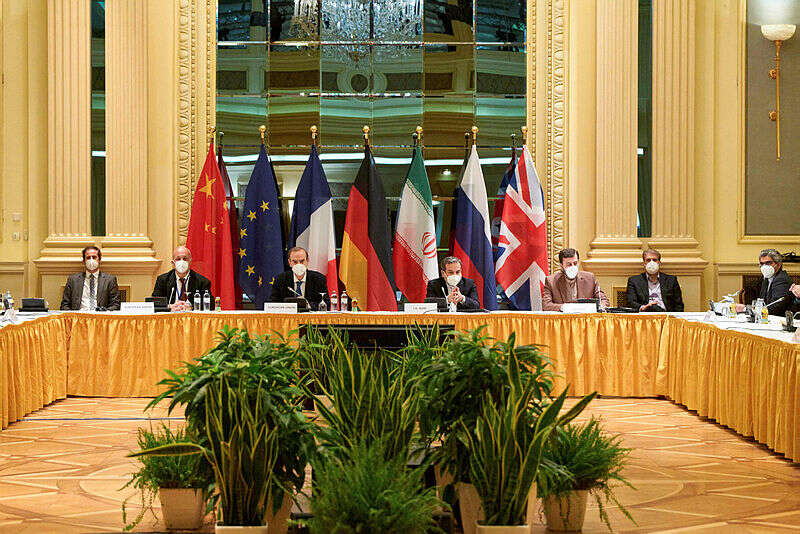
Delegation members from the parties to the Iran nuclear deal attend a meeting at the Grand Hotel of Vienna, Saturday April 17, 2021 | Unnamed Israeli diplomats over the weekend unofficially expressed disappointment over what they called “complete American capitulation” in nuclear talks with Iran in Vienna. Learning the lessons from the Obama administration’s clashes with Israel in 2015, the Biden administration is trying to avoid any surprises and is keeping Israel abreast of developments. With that, the two allies remain at considerable odds over Iran and its nuclear ambitions.
weiterlesen / click to continue
« neuere Artikel / next articles ältere Artikel / previous articles »