MESOPOTAMIA NEWS : NEUER AMNESTY APPELL TÜRKEI

Türkei: Hunderte Kritiker der Militäroffensive in Nordsyrien verhaftet
Hunderte Menschen wurden in der Türkei verhaftet und strafrechtlich verfolgt, weil sie die türkische Militäroffensive in Nordsyrien kritisiert haben.

BERLIN, 31.10.2019 – Hunderte Menschen wurden in der Türkei verhaftet und strafrechtlich verfolgt, weil sie die türkische Militäroffensive in Nordsyrien kritisiert oder in den Medien darüber berichtet haben. Sie sehen sich mit absurden Anschuldigungen konfrontiert. Dies dokumentiert ein neuer Amnesty-Kurzbericht.

„Die türkische Regierung nutzt die laufende Offensive als Vorwand, um massiv gegen Kritiker ihrer Politik vorzugehen – betroffen sind Medienvertreter, Oppositionelle, aber auch private Nutzer sozialer Medien“, sagt Markus N. Beeko, Generalsekretär von Amnesty International in Deutschland. „Die türkische Rundfunkaufsichtsbehörde kündigte einen Tag nach Beginn der Militäroffensive in Nordsyrien an, dass sie kritische Berichterstattung nicht tolerieren werde. Mehrere Journalisten wurden verhaftet, bei anderen wurde die Wohnung durchsucht. Auch internationale Medienschaffende sind zur Zielscheibe geworden.“

„Gegen mehrere Abgeordnete, die sich kritisch über den Einmarsch geäußert hatten, wird derzeit ermittelt. Gewerkschafter und Mitglieder der Oppositionspartei HDP wurden verhaftet“, so Beeko weiter. „In den sozialen Medien wurden allein in der ersten Woche der Offensive 839 Profile unter dem Vorwand überprüft, angeblich kriminelle Inhalte geteilt zu haben. Offiziellen Zahlen zufolge wurden 186 Menschen wegen Äußerungen in den sozialen Medien verhaftet und 24 von ihnen kamen in Untersuchungshaft.“

„Amnesty International fordert die türkischen Behörden dazu auf, das Recht auf freie Meinungsäußerung und Versammlungsfreiheit zu respektieren. Friedliche Kritik am türkischen Einmarsch in Syrien und Friedensappelle dürfen nicht kriminalisiert werden.“

Den Bericht finden Sie https://cloud.amnesty.de/index.php/s/gzGiZmP8SePTngj
Kontakt:

AMNESTY INTERNATIONAL DEUTSCHLAND e. V.
Pressestelle . Zinnowitzer Straße 8 . 10115 Berlin

weiterlesen / click to continue

Military Policy, Techno-Nationalism Trends and Defence Industrial Capabilities

MESOPOTAMIA NEWS BACKGROUNDER

Can Kasapoğlu  – Turkey’s Nuclear Onset –  SWP Comment 2019/C 38, October 2019 

President Recep Tayyip Erdoğan has recently stated that there is no reason why Tur­key should not have nuclear warhead-tipped missiles, at a time when other nations also possess such a deterrent. The Turkish president’s remarks sparked heated debates as to Ankara’s possible military policy shifts and related nuclear objectives. In the 2010s, Turkey accomplished a number of outstanding achievements in the defence sector, especially in unmanned systems development. Ankara is also pursuing a ballistic missile programme (the Bora missile) which saw its operational debut back in May 2019. However, in the short term, the Turkish defence technological and in­dus­trial base (DTIB) lacks the capacity to support military-grade nuclear proliferation, nuclear warhead design and strategic ballistic missile production. More importantly, present indicators suggest no backtrack from Turkey’s non-proliferation commitments. Rather, the ‘nuclear missile’ rhetoric essentially highlights Ankara’s geo­political worldview.

weiterlesen / click to continue

MESOPOTAMIA NEWS QUESTIONS: Will Adana accord take Erdogan to Damascus?

Fehim Tastekin October 28, 2019  Article Summary – AL MONITOR – Drawing on a controversial 1998 accord between Ankara and Damascus, Russia wants to get Turkey on board with its game plans for Syria and beyond, including energy in the eastern Mediterranean.

As Operation Peace Spring placed another territory in northern Syria under Turkish control, a crucial question under debate is whether Ankara could restore ties with Damascus on the basis of the 1998 Adana accord, referenced in the deal that Turkey agreed with Russia last week.

weiterlesen / click to continue

MESOPOTAMIA NEWS : PKK/PYD IN WASHINGTON – Syrian Kurdish commander sparks fresh US-Turkish row

Amberin Zaman October 25, 2019 Article Summary – AL MONITOR – Mazlum Kobane, the chief of the Syrian Democratic Forces, may visit Washington — a move that would likely prompt Turkish calls for his extradition. As Turkey and the United States lurch from crisis to crisis, the latest flashpoint centers around Mazlum Kobane, commander in chief of the Syrian Democratic Forces (SDF), the Kurdish-led militia that crushed the Islamic State (IS) in Syria with US backing. Turkey is furious that a group of congressmen, led by Sen. Lindsey Graham, R-S.C., have invited Kobane to Washington and are pressing the State Department to issue him a visa. Turkey calls Kobane a “terrorist” and has issued a red alert for his arrest via Interpol. Turkey has also placed a multimillion-lira bounty — with a value that shrinks alongside Turkey’s national currency — on his head.

weiterlesen / click to continue

MESOPOTAMIA NEWS : WIE US BOTSCHAFTER ROBERT FORD DIE FUNKTIONDER PYD (PKK) PARTEI IN SYRIEN ERKLÄRT  / OSMAN OECALAN & AMNESTY !

Militäroffensive in Syrien  / Türkischer Oppositionspolitiker: USA wollen mit PYD Ölfelder in Syrien kontrollieren – Von Von Nabi Yücel

NEX24 27 Oct 2019 – Der ehemalige türkische Diplomat, CHP-Politiker und Politologe Onur Öymen gab gegenüber einem türkischen Online-Nachrichtenportal ein Interview. Darin schildert Öymen, wie der ehemalige US-Botschafter von Damaskus, Robert Ford, am 11. Mai 2017 die Gründung der “Partiya Yekîtiya Demokrat” (dt. Partei der Demokratischen Union, PYD) erklärt.

Der ehemalige türkische Diplomat, CHP-Politiker und Politologe Onur Öymen gab gegenüber einem türkischen Online-Nachrichtenportal ein Interview. Darin schildert Öymen, wie der ehemalige US-Botschafter von Damaskus, Robert Ford, am 11. Mai 2017 die Gründung der „Partiya Yekîtiya Demokrat“ (dt. Partei der Demokratischen Union, PYD) erklärt.

Die nordsyrische Partei PYD gilt als Schwesterpartei der Terrororganisation PKK, aus der sie 2003 hervorgegangen ist. Laut eigener Satzung ist die PYD Teil der PKK, wurde auf Beschluss der PKK gegründet.

In OdaTV interviewt Reporterin Nurzen Amuran den ehemaligen türkischen Diplomaten Onur Öymen. Hier eine Zusammenfassung des Interviews:

weiterlesen / click to continue

MESOPOTAMIA NEWS : THE GREAT ERDOGAN THREAT FOR THE WEST

Turkey’s Nuisance Value / By Begin/Sadat Center Israel

By Burak Bekdil October 25, 2019  – BESA Center Perspectives Paper No. 1,322, October 25, 2019

EXECUTIVE SUMMARY: Turkey’s value for the West is not about the good it can offer but the evil it might choose not to spread. In recent years western tolerance of Turkey has stemmed not from appreciation of its advanced democratic culture but from fears of the chaos it can unleash.

This author coined the term “Turkeys nuisance value” in an article published 14 years ago to explain what made the country an asset for the EU it aspired to join. The article challenged Western euphemisms about the potential entrance into the European club of an explicitly non-European culture. At the time, Western media and academic papers were full of “Yes to Turkish membership” naiveté dancing around clichéd themes like “Turkey is strategically important,” “Turkey is a bridge between East and West,” and “Turkey’s post-modern Islamists [then PM Recep Tayyip Erdoğan et al] are reformist democrats.”

From the June 2005 article published in Hürriyet newspaper:

weiterlesen / click to continue

MESOPOTAMIA NEWS TODAYS OPINION : Following Trump’s lead, Putin gives Erdogan what he wants

Semih Idiz October 24, 2019 Article Summary  – al monitor – Even his greatest detractors in Turkey are complimenting Erdogan over winning US and Russian support against the Syrian Kurds.The agreement President Recep Tayyip Erdogan secured with Russian President Vladimir Putin on Oct. 22 complements his recent green light from US President Donald Trump for Turkey’s military incursion into Syria against the formerly US-backed People’s Protection Units (YPG).

Erdogan has in effect secured Moscow’s acceptance of Turkey’s Operation Peace Spring against the YPG, launched Oct. 9. Ankara considers the YPG a Kurdish terrorist organization that threatens its security.

weiterlesen / click to continue

MESOPOTAMIA NEWS “HAPPY ERDOGAN” : EXCLUSIVE: EU transfers €500m Turkey aid project to IFRC – but mulls exit strategy

  • 24 October 2019  THE NEW HUMANITARIAN  – ‘This is a meaningful shift.’Ben Parker   

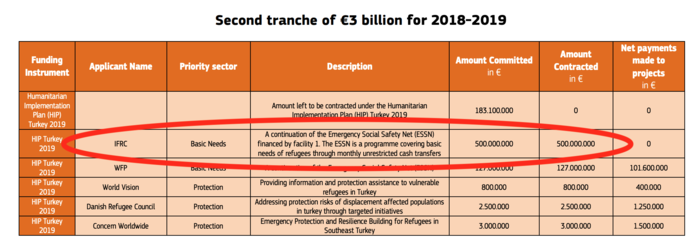
The European Commission has picked a new partner to run the most valuable humanitarian aid contract in the world. Out goes the UN World Food Programme, in comes the International Federation of Red Cross and Red Crescent Societies, which will handle €500 million allocated for cash allowances for refugees in Turkey.

Under the new deal, for which the funds are now contracted, according to a document on the EU’s website, the IFRC will take over a project that provides about 1.6 million – mainly Syrian – refugees in Turkey with monthly cash allowances; 61 percent are children.

The New Humanitarian understands that the IFRC will take over from the WFP in April 2020. The EU issued a bridging extension to the WFP in August.

The IFRC was selected to take over the scheme – known as the Emergency Social Safety Net, or ESSN – after a three-way tendering process that began in January and included the World Bank as well as the WFP.

The three agencies confirmed they were bidding after TNH obtained a batch of internal European Commission documents on the bidding process and the strategic aims of the project earlier in the year.

For the IFRC to win the bid is something of an upset in the aid contracting world, where the WFP and the UN’s refugee agency, UNHCR, have grown dominant in cash transfer projects, at the expense of NGOs.

“This is a meaningful shift,” said cash aid expert Paula Gil Baizan. “Basically, a donor is sending out the message that a local organisation in the shape of the Red Cross is as able to manage the world’s largest project as a UN agency.”

The IFRC declined to comment, citing a publicity embargo. A European Commission official confirmed that the IFRC would be the next partner for the ESSN.

“Basically, a donor is sending out the message that a local organisation in the shape of the Red Cross is as able to manage the world’s largest project as a UN agency.”

How the scheme works

The ESSN operates as an extension of the Turkish government’s social welfare system and relies on the services of a state-owned bank, Halkbank.

Eligible refugees – about one third of the total living in Turkey – get a bank debit card that is topped up monthly with about 120 Tukish lira (about $20) per person that they can choose to spend as they wish.

Much of the day-to-day implementation is done by the Turkish Red Crescent, the Ministry of Family, Labour and Social Services, and local charitable foundations.

The project has reported success in preventing refugee families from sliding into destitution and in addressing “negative coping practices” that could include child labour, poor diets, or debt.

The ESSN is the world’s largest single humanitarian project and the flagship of the European Commission’s Turkey portfolio. Now entering a new phase under IFRC management, it accounts for almost a third of the bloc’s global €1.6 billion 2019 emergency aid budget.

The IFRC is the Geneva-based alliance of 191 national Red Cross and Red Crescent societies, but the new project will dwarf any previous IFRC grant, representing more than its entire 2018 expenditure of about 347 million Swss francs (€315 million).

Cutting overheads

According to the internal documents, the IFRC initially bid a much lower overhead rate than its two rivals. Letters from the Commission dated 15 February to the three bidders asked for clarification, including on the justification for the indirect support costs, which were listed as follows – IFRC: €8.7 million; World Bank: €21.9 million; World Food Programme: €33 million.

Agencies hoping to win the contract “should make efforts to minimise operational overheads and deliver the best value for money (efficiency and effectiveness)”, a European Commission official said, on condition of anonymity, in response to a question from TNH earlier this year.

ECHO came under fire in a 2018 European Commission audit report for its ESSN spending, and was given until the end of 2020 to tighten up. The audit criticised the seven percent (later reduced to 6.5 percent) overhead fee the WFP was receiving on the total value of the project.

The report found that “no supporting evidence was provided to demonstrate that this cost was reasonable.” The WFP told TNH earlier in the year that it simply follows the financial rules set by its executive board, comprised of member states, many of which are EU members.

In common with other aid grants, the ESSN pays its contractor the indirect overhead rate above and beyond the direct costs of the specific project.

These unrestricted overheads allow aid agencies to cover general expenditure, which may range from rent at HQ to senior management costs and legal compliance. In this case, given the size of the overall grant, the auditors objected to the €64 million paid to the WFP over three years for unspecified purposes.

The European Court of Auditors also questioned if the European Commission should have given the WFP 80 percent advances. This led to the UN agency earning bank interest on two tranches (€278 million and €520 million) of project funding – some received a year before it was spent.
“The level of pre-financing paid is not appropriate,“ the audit found, while also criticising a one percent “cash transfer fee” paid to a “local implementing partner”, later confirmed in the European Parliament as the Turkish Red Crescent.

Letters to the three bidders seeking to win the renewed contract also asked about “indicative amount and use” of any bank interest earned on EU-supplied funds.

Exit strategy

As well as being costly, the ESSN has political significance for Europe.

The EU dramatically stepped up aid to Turkey after the peak in Syrian and other refugee arrivals in 2015. Billions of euros was promised, much of it linked to limiting the flow of refugees.

The Commission’s auditors urged ECHO to find an exit strategy, but their report acknowledged that “a successful handover is ultimately dependent on the Turkish authorities’ willingness to take over the project and to allocate sufficient resources to fund it.”

Disruption to the ESSN could spark unrest in Turkey and fuel renewed migration to the European Union, according to the internal EU papers.

A November 2018 briefing – prepared for Christos Stylianides, the head of ECHO, and other senior EU officials – said a “brutally interrupted” ESSN could have an “impact on social cohesion in Turkey”. It added that a poorly managed exit could also change the “incentives for onward migration”, if refugees faced reduced support.

The EU plans to spend some €840 million in the next two years on the ESSN, according to the internal documents. However, it hopes to find ways to lower the need for EU support in future, for example by helping refugees find work.

The internal documents show that Brussels is seeking to pass responsibility back to the Turkish government, while attempting to avoid any unrest or renewed refugee flows into Europe.

Asked by TNH for more information on this exit strategy, a European Commission spokesperson said: “We never comment on alleged leaks.”

However, replying to a separate question by email in August, the spokesperson indicated that talks on the issue were ongoing: “The EU is in discussions with the Turkish authorities for the long-term sustainability of the major projects, including the ESSN, primarily in the possible integration of part of the projects into the existing Turkish welfare system.”

weiterlesen / click to continue

MESOPOTAMIA NEWS : COMPLETE HUMAN RIGHTS REPORT ON TURKEY

HRFT Documentation Center Daily Human Rights Report

September 2019
The reports of following days are missing: 01-03, 11, 27 September

04 September 2019 Daily Human Rights Report
(09/029) Murdered Women… According to the report issued by We Will Stop Femicide Platform on September 3, 2019, at least 49 women are murdered by men in August 2019 in Turkey. (09/030) Child Was Wounded Due to Mine Blast in Mardin… It is learned that a child named A. S. (14) who was shepherding in Akdoğan village of Mardin’s Kızıltepe district on September 3, 2019, got heavily wounded due to blast of a mine that he finds on the land. (09/031) Torture and Ill-Treatment Under Custody in Mardin… It is learned from the news coverage of September 3, 2019 that a person named F.A., who was detained in the police intervention against protests in Mardin on August 21, 2019, which started after trustee appointment of the Ministry of Interior to Diyarbakır, Van and Mardin; was subjected to torture and ill-treatment under custody. It is reported that F.A. had to have sutures on his back due to torture, and that he was forced to sign a detention report and since he rejected to do so, he was taken to containers in the yard of the police directorate. F.A. states the following: “They told me that I had to sign it and that they would rape me and harm my family if I do not sign (…) A police officer with long hair who was named Ahmet, told me that he would rape me, take me to another place where he would torture and rape me and then arrest me on a report and harm my family, in case I do not sign the report (…) I was afraid of being subjected to torture and rejected to sign it. The police officer named Ahmet started to kick and punch me. And he threatened me by saying ‘Now it is too late. I will rape you and beat you whether you sign it or not. I can kill you here and dump your dead body’ (…)

weiterlesen / click to continue

Deutsche Milliardenhilfe Türkei

MESOPOTAMIA NEWS : MERKELS SCHUTZGELD AN ERDOGAN „PRO ASYL“

Nur drei arme Länder erhalten mehr Geld aus Berlin als die Türkei. Dabei wurde die Entwicklungshilfe längst eingestellt. – Von Christian Geinitz – FAZ

WIEN, 23. Oktober. Waffenruhe hin oder her: Über den Krieg in Syrien driften Europa und die Türkei immer weiter auseinander. Zuvor hatten schon Ankaras Gasbohrungen vor Zypern, die Rückschritte in Demokratie und Rechtsstaatlichkeit sowie die Festnahmen von In-und Ausländern die Beziehungen belastet. Im Mai stellte der Europäische Rat fest, „dass sich die Türkei immer weiter von der EU entfernt”. Deshalb könne es vorerst keine weiteren Gespräche zum EU-Beitritt und zur Modernisierung der Zollunion geben.

Das hindert die EU und ihre Mitglieder allerdings nicht daran, Ankara — das am Mittwoch vom Ende der amerikanischen Sanktionen aufgrund der Syrien-Offensive positiv überrascht wurde — großzügig zu alimentieren. Trotz der wachsenden Isolation seit dem Putschversuch 2016 fließen weiterhin Milliarden an Steuergeld in die Türkei. Zwar hat Brüssel die “Heranführungshilfen” (IPA) gekürzt: Die Zusagen für 2018 bis 2020 sinken um 40 Prozent oder 759 Millionen Euro. Aber noch immer stehen von 2014 bis 2020 fast 3,7 Milliarden zur Verfügung, mehr als für jeden anderen Beitrittskandidaten. Bedenklich stimmt zudem, dass die Hilfen ihre Ziele zum Teil verfehlen. Das legt ein Bericht des EU-Rechnungshofs nahe, der bemängelt, dass die Finanzspritzen nicht an klare Bedingungen geknüpft seien und bei Fehlverhalten nicht ausgesetzt werden könnten.

weiterlesen / click to continue

« neuere Artikel / next articles   ältere Artikel / previous articles »